Physical hazard · Flammable gases
H231 — May react explosively even in the absence of air at elevated pressure and/or temperature
Physical hazard statements describe what the substance itself can do — explode, ignite, react, corrode metal. No substance with a harmonised EU classification carries this code.
01 · Wording
What H231 says
May react explosively even in the absence of air at elevated pressure and/or temperature.
CLP Annex III · Physical hazards
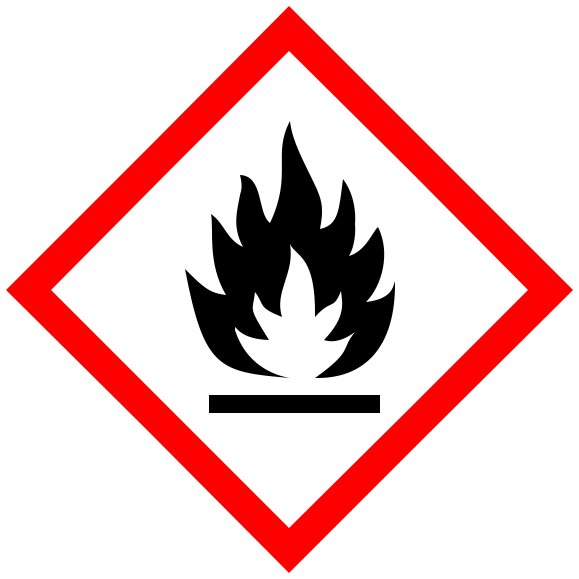
Flammable gases GHS chapter 2.2
Category Chemically unstable B · pictogram GHS02 (flame) · signal word Danger
Introduced in Rev.4 (2011).
Added by UN GHS Rev.4 and unchanged through Rev.11 (2025). Jurisdictions that sit on an earlier revision do not have this code at all.
Nine editions of the UN model text, 86 hazard statements, 19 of which ever moved. Read the full story in what changed in UN GHS Rev.11.
02 · Languages
H231 in the 24 official EU languages
A label put on the market in an EU country must carry the wording of that country's own language version of CLP — not a translation of the English one. These 24 lines are quoted from the consolidated regulation, Annex III, and are the text to print.
| Language | Official wording of H231 |
|---|---|
| BG български Bulgarian | Може да реагира експлозивно дори при отсъствие на въздух при повишено налягане и/или температура. |
| ES español Spanish | Puede explotar incluso en ausencia de aire, a presión y/o temperatura elevadas. |
| CS čeština Czech | Při zvýšeném tlaku a/nebo teplotě může reagovat výbušně i bez přítomnosti vzduchu. |
| DA dansk Danish | Kan reagere eksplosivt selv i fravær af luft ved forhøjet tryk og/eller temperatur. |
| DE Deutsch German | Kann auch in Abwesenheit von Luft bei erhöhtem Druck und/oder erhöhter Temperatur explosionsartig reagieren. |
| ET eesti Estonian | Võib reageerida plahvatuslikult isegi õhuga kokku puutumata kõrgenenud rõhul ja/või temperatuuril. |
| EL ελληνικά Greek | Δύναται να εκραγεί σε υψηλή θερμοκρασία και/ή πίεση ακόμη και απουσία αέρος. |
| EN English English | May react explosively even in the absence of air at elevated pressure and/or temperature. |
| FR français French | Peut exploser même en l’absence d’air à une pression et/ou température élevée(s). |
| GA Gaeilge Irish | D’fhéadfadh sé imoibriú go pléascach fiú mura bhfuil aer ann ag brú ardaithe agus/nó ag teocht ardaithe. |
| HR hrvatski Croatian | Može eksplozivno reagirati i bez prisustva zraka na povišenom tlaku i/ili temperaturi. |
| IT italiano Italian | Può esplodere anche in assenza di aria a pressione e/o temperatura elevata. |
| LV latviešu Latvian | Var eksplodēt pat bezgaisa vidē, paaugstinoties spiedienam un/vai temperatūrai. |
| LT lietuvių Lithuanian | Gali sprogti net ir nesant oro, esant didesniam slėgiui ir (arba) temperatūrai. |
| HU magyar Hungarian | Magas nyomáson és/vagy hőmérsékleten még levegő hiányában is robbanásszerű reakcióba léphet. |
| MT Malti Maltese | Jista jisplodi anke fin-nuqqas ta’ l-arja fi pressjoni għolja u/jew f’temperatura għolja. |
| NL Nederlands Dutch | Kan explosief reageren zelfs in afwezigheid van lucht bij verhoogde druk en/of temperatuur. |
| PL polski Polish | Może reagować wybuchowo nawet bez dostępu powietrza pod zwiększonym ciśnieniem i/lub po ogrzaniu. |
| PT português Portuguese | Pode reagir explosivamente mesmo na ausência de ar a alta pressão e/ou temperatura. |
| RO română Romanian | Pericol de explozie, chiar și în absența aerului la presiune și/sau temperatură ridicată. |
| SK slovenčina Slovak | Môže reagovať výbušne aj bez prítomnosti vzduchu pri zvýšenom tlaku a/alebo teplote. |
| SL slovenščina Slovenian | Lahko reagira eksplozivno tudi v odsotnosti zraka pri povišanem tlaku in/ali temperature. |
| FI suomi Finnish | Voi reagoida räjähtäen jopa ilmattomassa tilassa kohonneessa paineessa ja/tai lämpötilassa. |
| SV svenska Swedish | Kan reagera explosivt även i frånvaro av luft vid förhöjt tryck och/eller temperatur. |
Source: CELEX:02008R1272-20260501, Annex III. © European Union, https://eur-lex.europa.eu — only the electronic Official Journal of the European Union is authentic. Irish is one of the 24 official languages and its H and P texts are printed inside the multilingual Annex tables, but no consolidated CLP has ever been published in Irish — which is why an Irish-primary label cannot be built here.
03 · Legal status
Where H231 is current
GHS is a United Nations model text, revised every two years, and each jurisdiction adopts a revision on its own timetable. A code can be legally current in one system and deleted in another — that is normal, not an error.
| Jurisdiction | Basis | Status of H231 |
|---|---|---|
| EU CLP | Regulation (EC) 1272/2008 CLP Annex IV, Part 2 (consolidated) | Current |
| US OSHA HazCom | 29 CFR 1910.1200 Appendix C UN GHS Rev.7 (final rule of 20 May 2024) | Current |
| US HazCom 2012 | legacy · GHS Rev.3 UN GHS Rev.3, Annex 3 | not in this system |
| UN GHS | Rev.11 (2025) UN GHS Rev.11, Annex 3 | Current |
Currently in force under: EU CLP, US OSHA HazCom, UN GHS. Sources: EU CLP · US OSHA HazCom · US HazCom 2012 · UN GHS
04 · Substances
Substances carrying H231
No substance with a harmonised classification in CLP Annex VI carries this code. That does not mean it is unused — suppliers apply it to their own mixtures.
All hazard statements
The full list of H-codes with the jurisdiction switch lives on the hazard statements hub. For what to do about the hazard, see precautionary statements (P-codes).
Wording quoted from the regulation named above. Substance counts come from harmonised classifications in CLP Annex VI — the statements on a real product also depend on the supplier's own classification. Always check the supplier safety data sheet.