Physical hazard · Organic peroxides · Self-reactive substances and mixtures
H241 — Heating may cause a fire or explosion
Physical hazard statements describe what the substance itself can do — explode, ignite, react, corrode metal. 2 substances with a harmonised EU classification carry this code.
01 · Wording
What H241 says
Heating may cause a fire or explosion.
CLP Annex III · Physical hazards
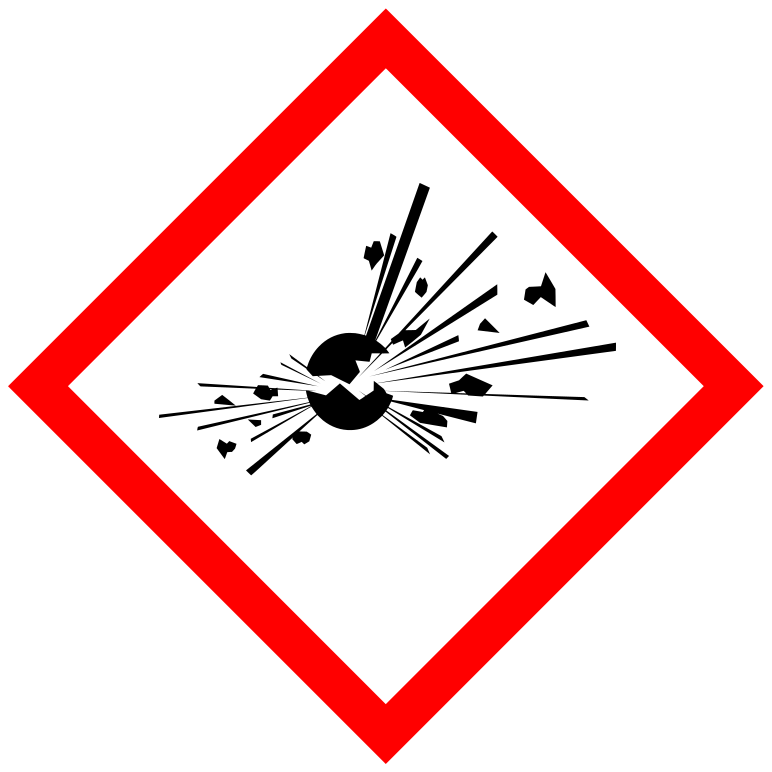
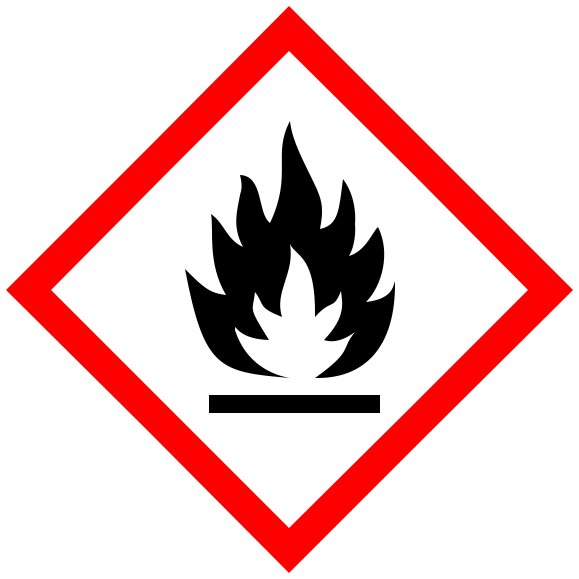
Unchanged since 2009.
Present in every UN GHS edition from Rev.3 (2009) to Rev.11 (2025), with the same wording throughout.
Nine editions of the UN model text, 86 hazard statements, 19 of which ever moved. Read the full story in what changed in UN GHS Rev.11.
02 · Languages
H241 in the 24 official EU languages
A label put on the market in an EU country must carry the wording of that country's own language version of CLP — not a translation of the English one. These 24 lines are quoted from the consolidated regulation, Annex III, and are the text to print.
| Language | Official wording of H241 |
|---|---|
| BG български Bulgarian | Може да предизвика пожар или експлозия при нагряване. |
| ES español Spanish | Peligro de incendio o explosión en caso de calentamiento. |
| CS čeština Czech | Zahřívání může způsobit požár nebo výbuch. |
| DA dansk Danish | Brand- eller eksplosionsfare ved opvarmning. |
| DE Deutsch German | Erwärmung kann Brand oder Explosion verursachen. |
| ET eesti Estonian | Kuumenemisel võib süttida või plahvatada. |
| EL ελληνικά Greek | Η θέρμανση μπορεί να προκαλέσει πυρκαγιά ή έκρηξη. |
| EN English English | Heating may cause a fire or explosion. |
| FR français French | Peut s'enflammer ou exploser sous l'effet de la chaleur. |
| GA Gaeilge Irish | D'fhéadfadh téamh a bheith ina chúis le dóiteán nó le pléascadh. |
| HR hrvatski Croatian | Zagrijavanje može uzrokovati požar ili eksploziju. |
| IT italiano Italian | Rischio d'incendio o di esplosione per riscaldamento. |
| LV latviešu Latvian | Sakaršana var izraisīt degšanu vai eksploziju. |
| LT lietuvių Lithuanian | Kaitinant gali sukelti gaisrą arba sprogti. |
| HU magyar Hungarian | Hő hatására meggyulladhat vagy robbanhat. |
| MT Malti Maltese | It-tisħin jista' jikkawża nar jew splużjoni. |
| NL Nederlands Dutch | Brand- of ontploffingsgevaar bij verwarming. |
| PL polski Polish | Ogrzanie może spowodować pożar lub wybuch. |
| PT português Portuguese | Risco de explosão ou de incêndio sob a acção do calor. |
| RO română Romanian | Pericol de incendiu sau de explozie în caz de încălzire. |
| SK slovenčina Slovak | Zahrievanie môže spôsobiť požiar alebo výbuch. |
| SL slovenščina Slovenian | Segrevanje lahko povzroči požar ali eksplozijo. |
| FI suomi Finnish | Räjähdys- tai palovaarallinen kuumennettaessa. |
| SV svenska Swedish | Brandfarligt eller explosivt vid uppvärmning. |
Source: CELEX:02008R1272-20260501, Annex III. © European Union, https://eur-lex.europa.eu — only the electronic Official Journal of the European Union is authentic. Irish is one of the 24 official languages and its H and P texts are printed inside the multilingual Annex tables, but no consolidated CLP has ever been published in Irish — which is why an Irish-primary label cannot be built here.
03 · Legal status
Where H241 is current
GHS is a United Nations model text, revised every two years, and each jurisdiction adopts a revision on its own timetable. A code can be legally current in one system and deleted in another — that is normal, not an error.
| Jurisdiction | Basis | Status of H241 |
|---|---|---|
| EU CLP | Regulation (EC) 1272/2008 CLP Annex IV, Part 2 (consolidated) | Current |
| US OSHA HazCom | 29 CFR 1910.1200 Appendix C UN GHS Rev.7 (final rule of 20 May 2024) | Current |
| US HazCom 2012 | legacy · GHS Rev.3 UN GHS Rev.3, Annex 3 | Current |
| UN GHS | Rev.11 (2025) UN GHS Rev.11, Annex 3 | Current |
Currently in force under: EU CLP, US OSHA HazCom, US HazCom 2012, UN GHS. Sources: EU CLP · US OSHA HazCom · US HazCom 2012 · UN GHS
04 · Substances
Substances carrying H241
Every entry whose harmonised CLP Annex VI classification includes this hazard statement. Substances with a reference page here open on this site; the rest open on ghssymbols.com.
Nothing matches that filter.
All hazard statements
The full list of H-codes with the jurisdiction switch lives on the hazard statements hub. For what to do about the hazard, see precautionary statements (P-codes).
Wording quoted from the regulation named above. Substance counts come from harmonised classifications in CLP Annex VI — the statements on a real product also depend on the supplier's own classification. Always check the supplier safety data sheet.