Physical hazard · Gases under pressure
H281 — Contains refrigerated gas; may cause cryogenic burns or injury
Physical hazard statements describe what the substance itself can do — explode, ignite, react, corrode metal. No substance with a harmonised EU classification carries this code.
01 · Wording
What H281 says
Contains refrigerated gas; may cause cryogenic burns or injury.
CLP Annex III · Physical hazards
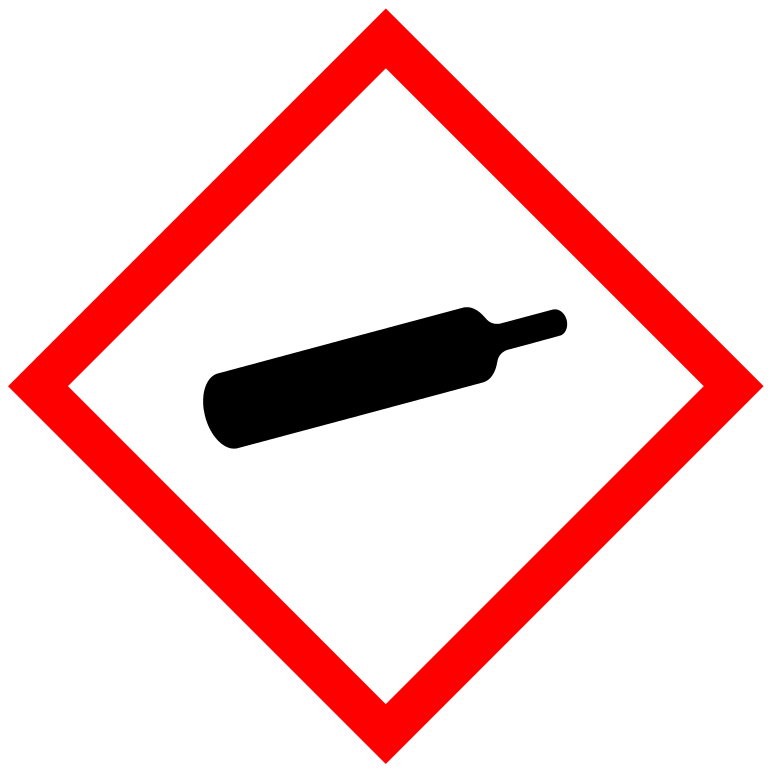
Gases under pressure GHS chapter 2.5
Category Refrigerated liquefied gas · pictogram GHS04 (gas cylinder) · signal word Warning
Unchanged since 2009.
Present in every UN GHS edition from Rev.3 (2009) to Rev.11 (2025), with the same wording throughout.
Nine editions of the UN model text, 86 hazard statements, 19 of which ever moved. Read the full story in what changed in UN GHS Rev.11.
02 · Languages
H281 in the 24 official EU languages
A label put on the market in an EU country must carry the wording of that country's own language version of CLP — not a translation of the English one. These 24 lines are quoted from the consolidated regulation, Annex III, and are the text to print.
| Language | Official wording of H281 |
|---|---|
| BG български Bulgarian | Съдържа охладен газ; може да причини криогенни изгаряния или наранявания. |
| ES español Spanish | Contiene gas refrigerado; puede provocar quemaduras o lesiones criogénicas. |
| CS čeština Czech | Obsahuje zchlazený plyn; může způsobit omrzliny nebo poškození chladem. |
| DA dansk Danish | Indeholder nedkølet gas, kan forårsage kuldeskader. |
| DE Deutsch German | Enthält tiefgekühltes Gas; kann Kälteverbrennungen oder -verletzungen verursachen. |
| ET eesti Estonian | Sisaldab külmutatud gaasi; võib põhjustada külmapõletusi või -kahjustusi. |
| EL ελληνικά Greek | Περιέχει αέριο υπό ψύξη· μπορεί να προκαλέσει εγκαύματα ψύχους ή τραυματισμούς. |
| EN English English | Contains refrigerated gas; may cause cryogenic burns or injury. |
| FR français French | Contient un gaz réfrigéré; peut causer des brûlures ou blessures cryogéniques. |
| GA Gaeilge Irish | Gás cuisnithe istigh ann; d'fhéadfadh sé a bheith ina chúis le dónna crióigineacha nó le díobháil chrióigineach. |
| HR hrvatski Croatian | Sadrži pothlađeni, ukapljeni plin; može uzrokovati kriogene opekline ili ozljede. |
| IT italiano Italian | Contiene gas refrigerato; può provocare ustioni o lesioni criogeniche. |
| LV latviešu Latvian | Satur atdzesētu gāzi; var radīt kriogēnus apdegumus vai ievainojumus. |
| LT lietuvių Lithuanian | Turi atšaldytų dujų, gali sukelti kriogeninius nušalimus arba pažeidimus. |
| HU magyar Hungarian | Mélyhűtött gázt tartalmaz; fagymarást vagy sérülést okozhat. |
| MT Malti Maltese | Fih gass imkessaħ; jista' jikkawża ħruq jew dannu minn temperaturi baxxi. |
| NL Nederlands Dutch | Bevat sterk gekoeld gas; kan cryogene brandwonden of letsel veroorzaken. |
| PL polski Polish | Zawiera schłodzony gaz; może spowodować oparzenia kriogeniczne lub obrażenia. |
| PT português Portuguese | Contém gás refrigerado; pode provocar queimaduras ou lesões criogénicas. |
| RO română Romanian | Conține un gaz răcit; poate cauza arsuri sau leziuni criogenice. |
| SK slovenčina Slovak | Obsahuje schladený plyn; môže spôsobiť kryogénne popáleniny alebo poranenia. |
| SL slovenščina Slovenian | Vsebuje ohlajen utekočinjen plin; lahko povzroči ozebline ali poškodbe. |
| FI suomi Finnish | Sisältää jäähdytettyä kaasua; voi aiheuttaa jäätymisvamman. |
| SV svenska Swedish | Innehåller kyld gas. Kan orsaka svåra köldskador. |
Source: CELEX:02008R1272-20260501, Annex III. © European Union, https://eur-lex.europa.eu — only the electronic Official Journal of the European Union is authentic. Irish is one of the 24 official languages and its H and P texts are printed inside the multilingual Annex tables, but no consolidated CLP has ever been published in Irish — which is why an Irish-primary label cannot be built here.
03 · Legal status
Where H281 is current
GHS is a United Nations model text, revised every two years, and each jurisdiction adopts a revision on its own timetable. A code can be legally current in one system and deleted in another — that is normal, not an error.
| Jurisdiction | Basis | Status of H281 |
|---|---|---|
| EU CLP | Regulation (EC) 1272/2008 CLP Annex IV, Part 2 (consolidated) | Current |
| US OSHA HazCom | 29 CFR 1910.1200 Appendix C UN GHS Rev.7 (final rule of 20 May 2024) | Current |
| US HazCom 2012 | legacy · GHS Rev.3 UN GHS Rev.3, Annex 3 | Current |
| UN GHS | Rev.11 (2025) UN GHS Rev.11, Annex 3 | Current |
Currently in force under: EU CLP, US OSHA HazCom, US HazCom 2012, UN GHS. Sources: EU CLP · US OSHA HazCom · US HazCom 2012 · UN GHS
04 · Substances
Substances carrying H281
No substance with a harmonised classification in CLP Annex VI carries this code. That does not mean it is unused — suppliers apply it to their own mixtures.
All hazard statements
The full list of H-codes with the jurisdiction switch lives on the hazard statements hub. For what to do about the hazard, see precautionary statements (P-codes).
Wording quoted from the regulation named above. Substance counts come from harmonised classifications in CLP Annex VI — the statements on a real product also depend on the supplier's own classification. Always check the supplier safety data sheet.