GHS Hazard Pictogram
GHS04 — Gas Cylinder Pictogram
Also called the gas cylinder symbol. Signal word: Warning.
Gases under pressure
What does GHS04 mean?
The gas cylinder pictogram indicates compressed, liquefied, refrigerated liquefied, or dissolved gases stored under pressure. These present risks of explosion if heated and asphyxiation if released in confined spaces.
Straight answers
The gas cylinder pictogram applies to chemicals that are…
…held under pressure: compressed gases, liquefied gases, refrigerated liquefied gases and dissolved gases. One CLP hazard class leads to it — gases under pressure, chapter 2.5 — and it carries 2 hazard statements, H280 and H281.
Does the gas cylinder mean the gas is toxic or flammable?
No. It says nothing about what the gas does — only that it is stored under pressure and the container can burst or, if refrigerated, cause cryogenic burns. The other hazards arrive with other pictograms: 173 of these 188 entries also carry the flame.
Which signal word goes with the gas cylinder?
Always Warning. Every category of gases under pressure takes the same word — this is one of only three pictograms that never appears with Danger.
Why is GHS04 so often missing from a cylinder label?
Because Article 26(1)(e) allows it. When GHS02 or GHS06 also applies, the gas cylinder becomes optional — and that covers 190 of these 188 entries. A propane cylinder showing only the flame is correctly labelled.
How many chemicals carry GHS04?
188 substances with a harmonised classification in CLP Annex VI.
Every number here is computed from CLP Annex VI at build time. See all nine pictograms compared.
Which hazard classes require GHS04?
GHS04 is assigned by 1 hazard class across 4 categories under CLP and UN GHS. The signal word is set by the category, not by the pictogram — which is why the same pictogram can carry both Danger and Warning. The full wording of every code is listed under Associated H-statements below.
Interactive tool
Critical temperature → gas-under-pressure group
Enter the critical temperature, or pick a packaging form for refrigerated/dissolved gases.
Associated H-statements (2)
Each code opens its own page: the verbatim CLP wording, its status under EU CLP, OSHA HazCom and UN GHS, and every harmonised substance that carries it. See also the full list of hazard statements and the precautionary statements.
Which pictograms appear next to GHS04
A label rarely carries one diamond. Counted across the 188 harmonised substances that carry GHS04 — before the Article 26 precedence rules remove anything.
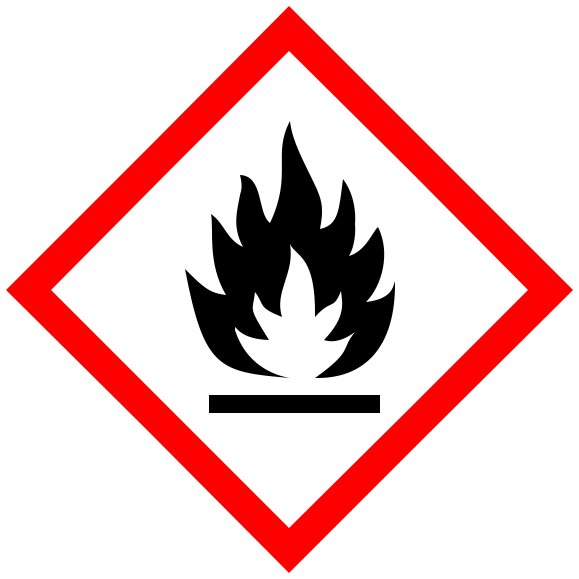 GHS02 Flame 173 · 92%
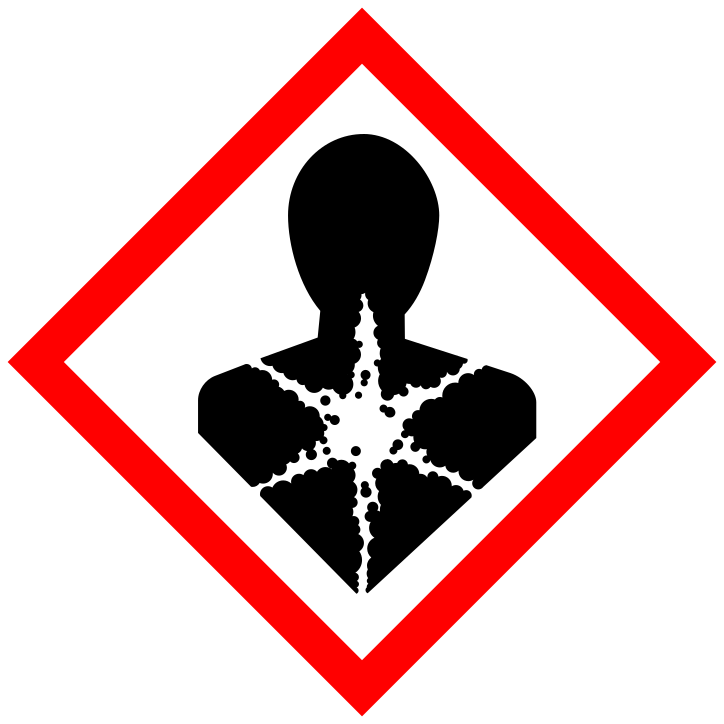 GHS08 Health Hazard 156 · 83%
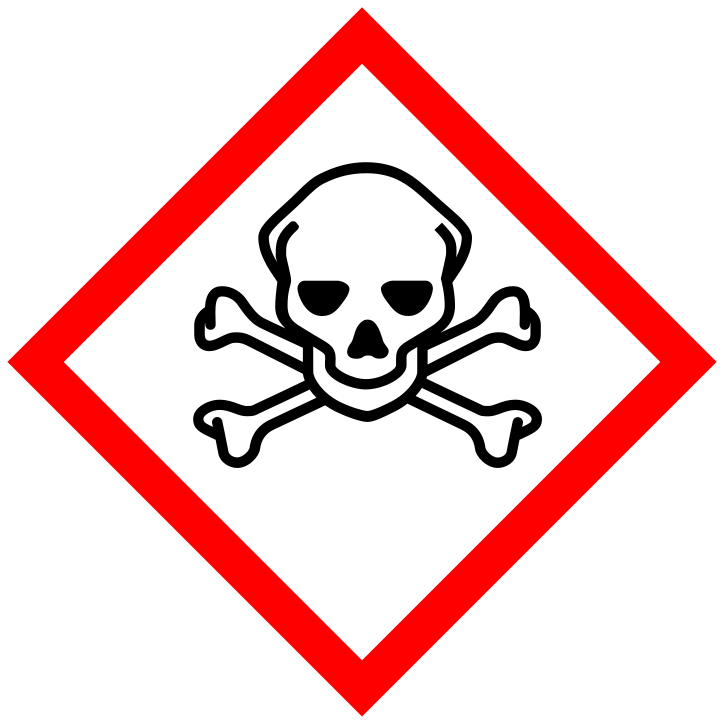 GHS06 Skull and Crossbones 17 · 9%
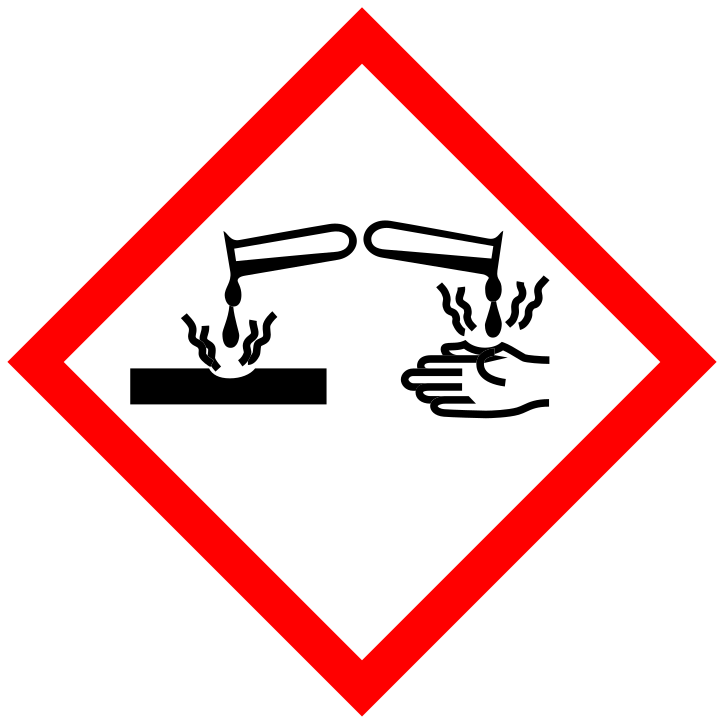 GHS05 Corrosion 13 · 6.9%
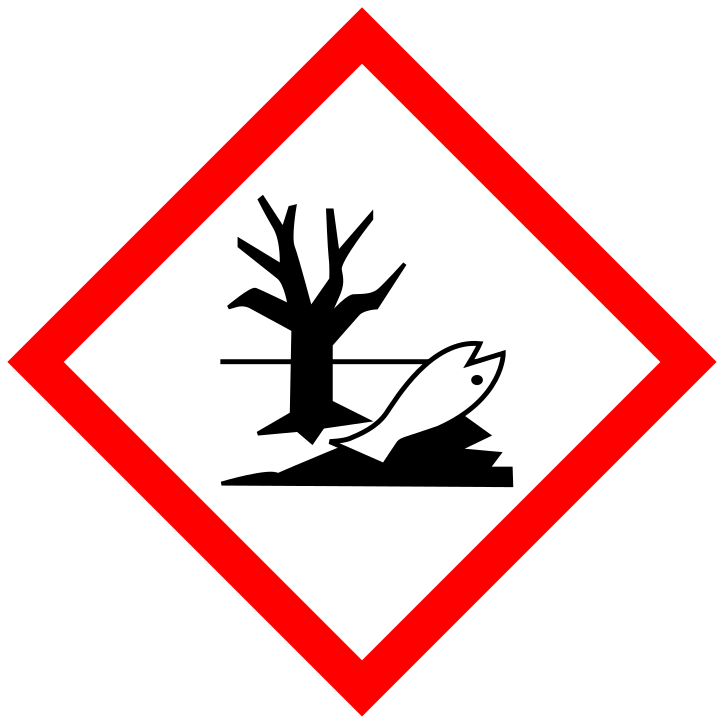 GHS09 Environmental Hazard 10 · 5.3%
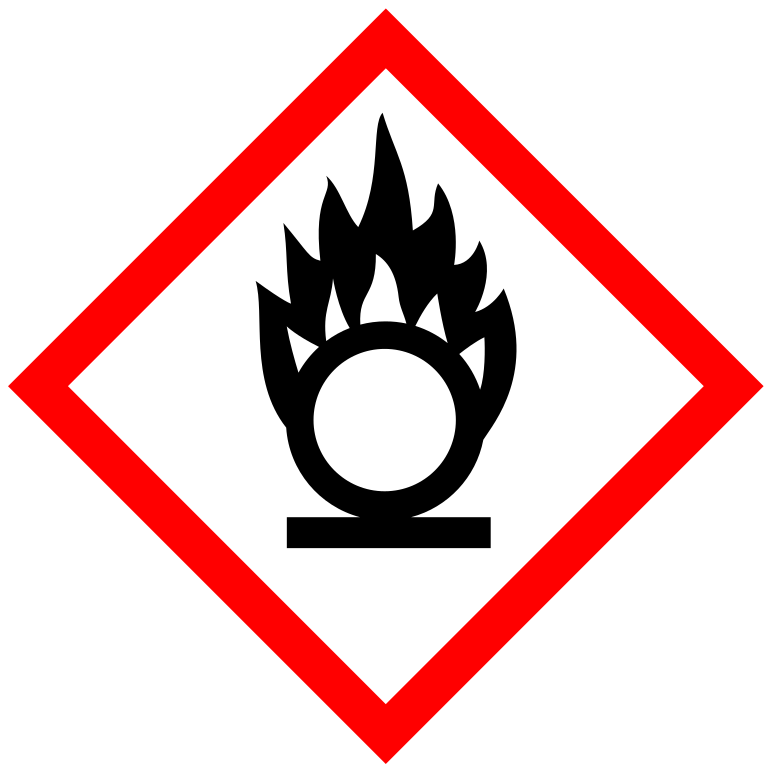 GHS03 Flame Over Circle 5 · 2.7%
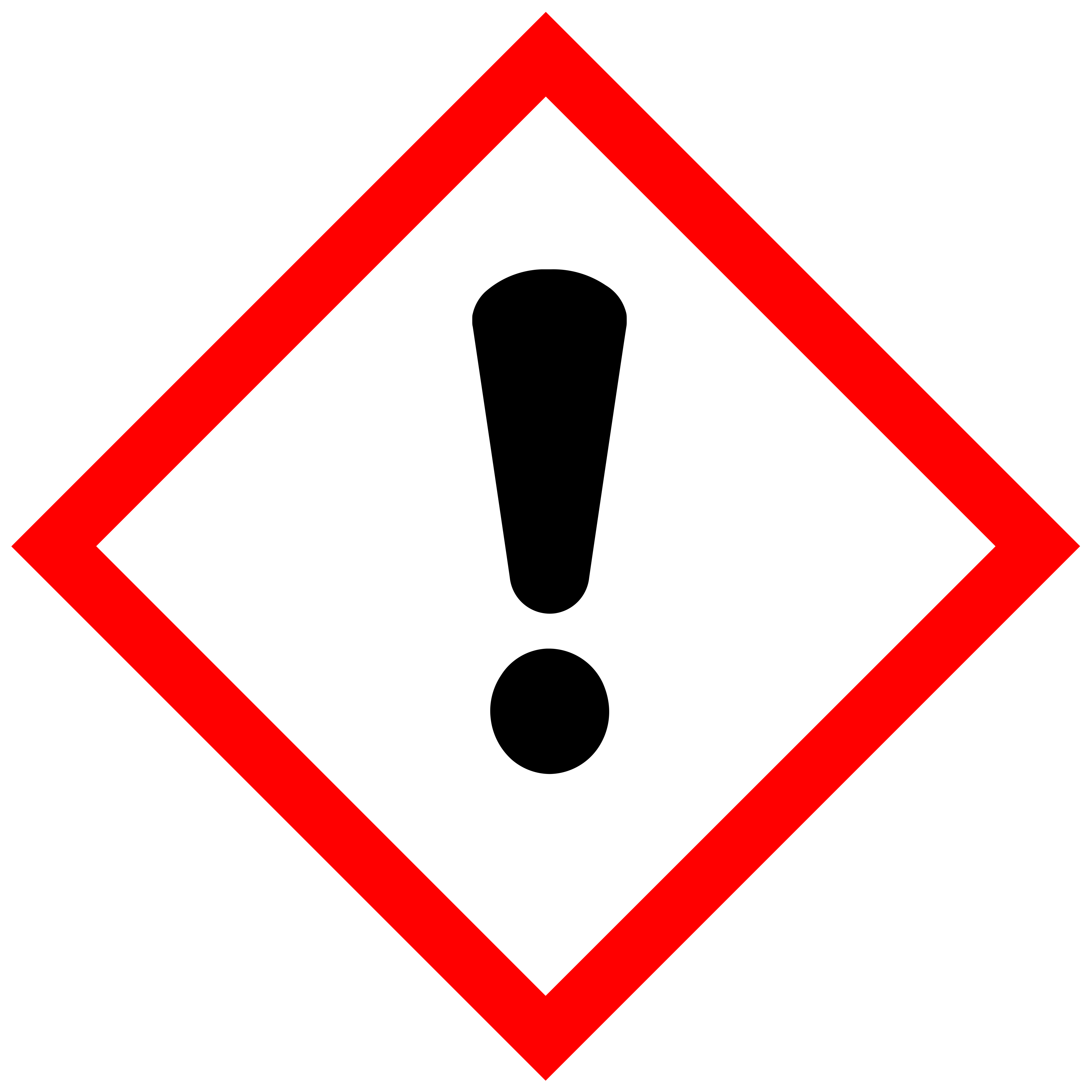 GHS07 Exclamation Mark 5 · 2.7%
The strongest pairing on the whole site: nine cylinders in ten also carry the flame, and more than eight in ten carry the health hazard. A gas under pressure is almost never only a pressure problem.
When GHS04 changes what else is shown
Article 26 of CLP cuts the number of diamonds on a label. One of its five rules touches GHS04.
If GHS02 or GHS06 applies, the use of GHS04 becomes optional.
This is the rule that fires constantly, and almost nobody quotes it: 173 of the 188 gas-cylinder entries also carry GHS02 and another 17 carry GHS06. On almost every real cylinder label the gas-cylinder diamond is optional.
Nothing in Article 26 makes GHS04 optional in the other direction unless a rule above says so. All five precedence rules, with the number of substances each one affects.
Storage & handling requirements
Secure cylinders upright with chains or straps at all times. Store away from heat sources, corrosives, and ignition sources. Use correct regulators and valves. Ensure adequate ventilation in storage and use areas. Cap cylinders when not in use.
Regulatory context (CLP / OSHA / REACH)
EU Pressure Equipment Directive (PED) 2014/68/EU applies to gas cylinders. EN ISO 11114-1 covers material compatibility. OSHA 29 CFR 1910.101 governs compressed gas handling in the USA. Regular inspection required.
Transport marking: GHS vs ADR/DOT
ADR Class 2 — Gases. Placard colour depends on gas type: non-flammable/non-toxic (green), flammable (red), toxic (white). UN number identifies specific gas. Specialised transport vehicles may be required.
Printing GHS04 on a label
A square set at a point — a diamond — with the black symbol on a white background and a red frame wide enough to be clearly visible. An all-black frame is a transport label, not a CLP pictogram. Size is set twice over: each pictogram must cover at least one fifteenth of the minimum label area required by Article 17, and must never be smaller than 1 cm². On a package of 3 litres or less that works out to 10 × 10 mm as the floor, and 16 × 16 mm where it fits.
Source: Regulation (EC) No 1272/2008, Annex I, 1.2.1.1–1.2.1.4 and Table 1.3 — the full table for all four package sizes. Building an actual label? The label constructor lays it out at the right proportions.
GHS04 — Gas Cylinder
High-resolution SVG vector file. Free for use in safety documents, SDS, and label design.
Substances classified with GHS04
Showing 24 of 188 substances in our database with this pictogram. View all →
- Gases (petroleum, light steam-cracked, butadiene conc.… CAS 68955-28-2Danger Details →Label
- nitrogen dioxide [1] dinitrogen tetraoxide [2] CAS 10102-44-0Danger No single CASLabel
- but-1-ene [1] butene, mixed-1-and-2-isomers [2]… CAS 106-98-9Danger No single CASLabel
- mono-methylamine [1] di-methylamine [2]… CAS 74-89-5Danger No single CASLabel
- butane [1] and isobutane [2] CAS 106-97-8Danger No single CASLabel
- chloromethane CAS 74-87-3Danger Details →Label
- bromomethane CAS 74-83-9Danger Details →Label
- Chloroethane CAS 75-00-3Danger Details →Label
- Hydrogen CAS 1333-74-0Danger Details →Label
- ammonia CAS 7664-41-7Danger SDS →Label
- chlorine CAS 7782-50-5Danger SDS →Label
- Phosphine CAS 7803-51-2Danger Details →Label
- Sulfur Dioxide CAS 7446-09-5Danger Details →Label
- oxalonitrile CAS 460-19-5Danger Details →Label
- Chlorine Dioxide CAS 10049-04-4Danger Details →Label
- Propylene CAS 115-07-1Danger Details →Label
- 1,3-Butadiene CAS 106-99-0Danger Details →Label
- hydrochloric acid CAS 7647-01-0Danger SDS →Label
- oxygen CAS 7782-44-7Danger SDS →Label
- Boron trifluoride CAS 7637-07-2Danger Details →Label
- Boron Trichloride CAS 10294-34-5Danger Details →Label
- Carbon Monoxide CAS 630-08-0Danger Details →Label
- Phosgene CAS 75-44-5Danger Details →Label
- Ethyl Nitrite CAS 109-95-5Danger Details →Label
Need full toxicological data?
GHS Symbols provides detailed hazard classification, H/P statements, ATE values and storage compatibility for all substances.
Ready to build a GHS-compliant label?
Auto-filled with GHS04 — Gas Cylinder hazard data
Open Label Maker → See all free GHS tools →