GHS Hazard Pictogram
GHS03 — Flame Over Circle Pictogram
Also called the flame over circle symbol. Signal word: Danger or Warning.
Oxidising substances
What does GHS03 mean?
The flame over circle pictogram indicates oxidising gases, liquids, and solids. These substances can intensify fire or cause combustion in materials that normally would not burn, significantly increasing fire risk.
Straight answers
What does the flame over circle pictogram mean?
That the substance supplies oxygen and makes other materials burn — an oxidising gas, liquid or solid. 3 CLP hazard classes lead to it and it carries 3 hazard statements: H270, H271 and H272.
What is the difference between the flame and the flame over circle?
The flame burns. The flame over circle does not have to burn at all — it feeds a fire that already exists, or starts one in a material that would not otherwise ignite. That is why oxidisers and flammables must be stored apart: each makes the other worse.
Which signal word goes with the flame over circle?
Both. Oxidising gases category 1 and the most severe oxidising liquids and solids take Danger; the milder categories take Warning.
Is bleach an oxidiser under GHS?
Sodium hypochlorite carries no oxidising hazard statement in CLP Annex VI, yet it is a real oxidiser in practice. Classification follows the test criteria, not intuition — and OSHA App. B explicitly allows known experience to override a test result. Absence of GHS03 is not evidence that a substance will not feed a fire.
How many chemicals carry GHS03?
37 substances with a harmonised classification in CLP Annex VI — the rarest of the nine.
Every number here is computed from CLP Annex VI at build time. See all nine pictograms compared.
Which hazard classes require GHS03?
GHS03 is assigned by 3 hazard classes across 7 categories under CLP and UN GHS. The signal word is set by the category, not by the pictogram — which is why the same pictogram can carry both Danger and Warning. The full wording of every code is listed under Associated H-statements below.
Interactive tool
Oxidizer screening (waiver check)
Oxidizers are classified only by UN testing — this is the GHS screening (waiver) step.
Associated H-statements (3)
Each code opens its own page: the verbatim CLP wording, its status under EU CLP, OSHA HazCom and UN GHS, and every harmonised substance that carries it. See also the full list of hazard statements and the precautionary statements.
Which pictograms appear next to GHS03
A label rarely carries one diamond. Counted across the 37 harmonised substances that carry GHS03 — before the Article 26 precedence rules remove anything.
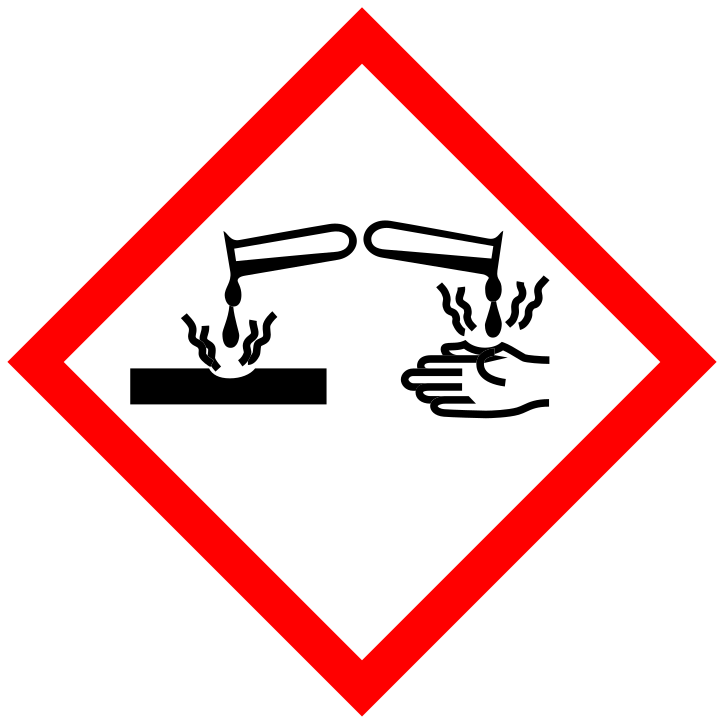 GHS05 Corrosion 19 · 51.4%
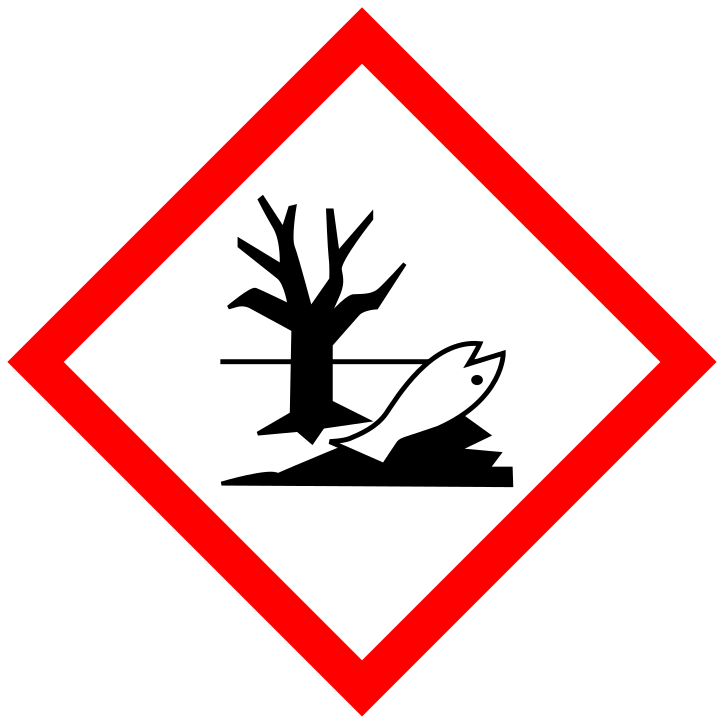 GHS09 Environmental Hazard 19 · 51.4%
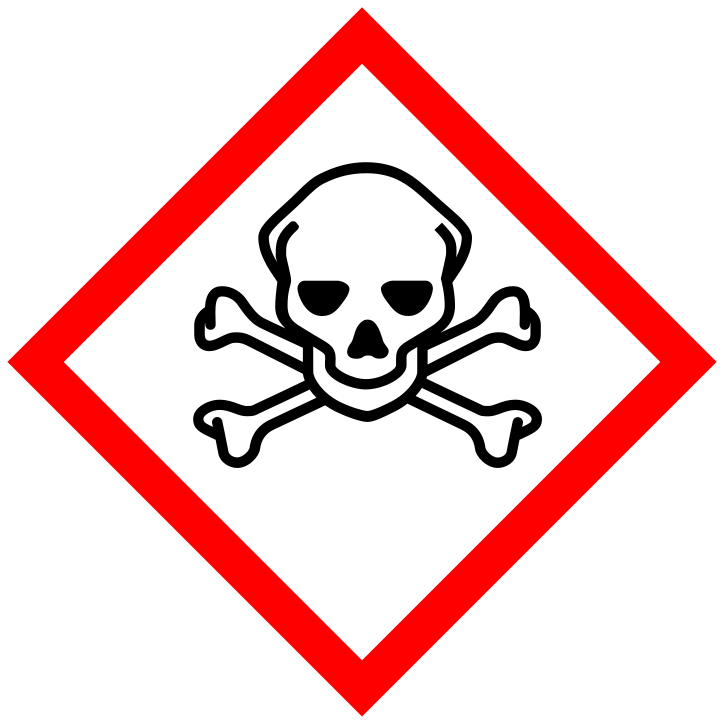 GHS06 Skull and Crossbones 17 · 45.9%
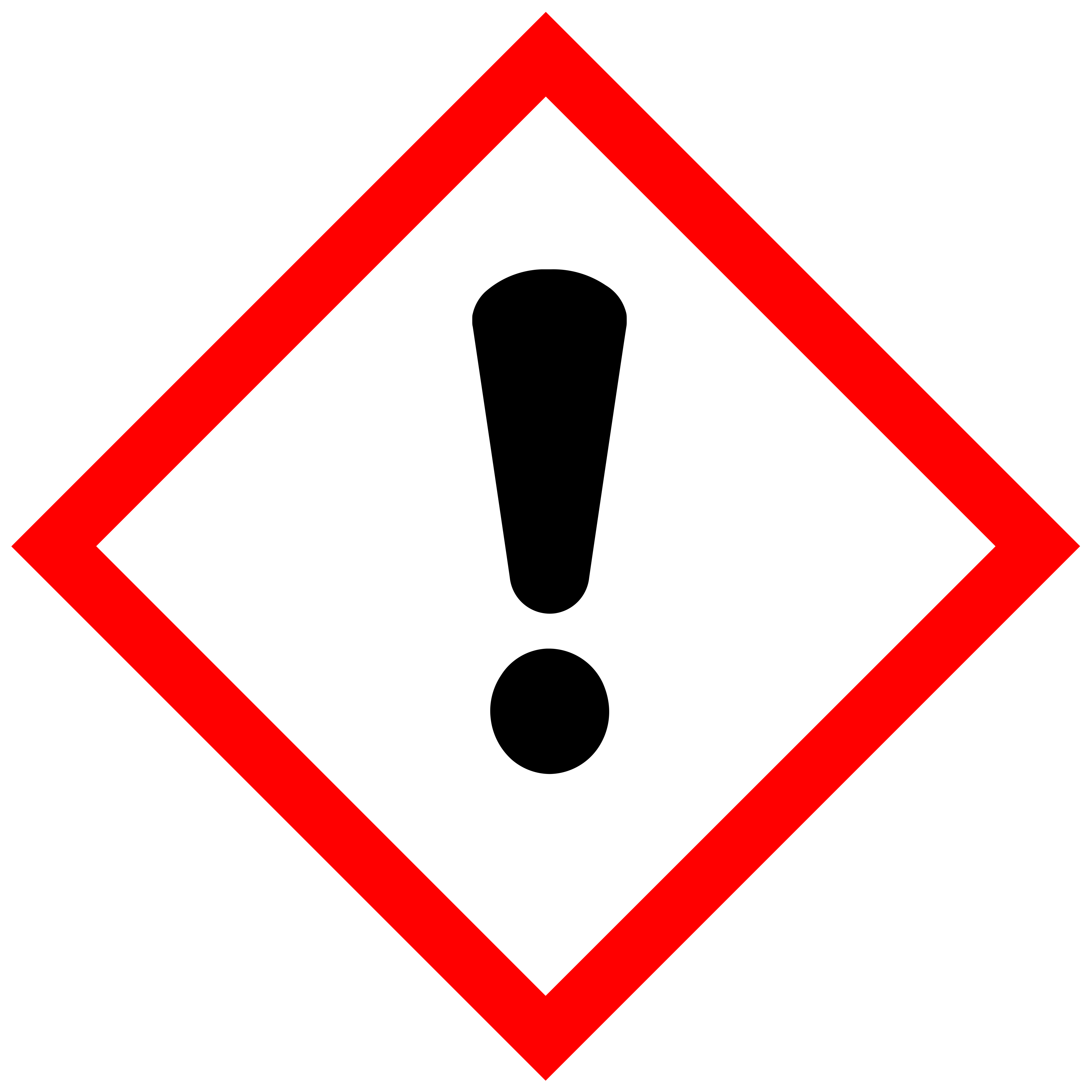 GHS07 Exclamation Mark 16 · 43.2%
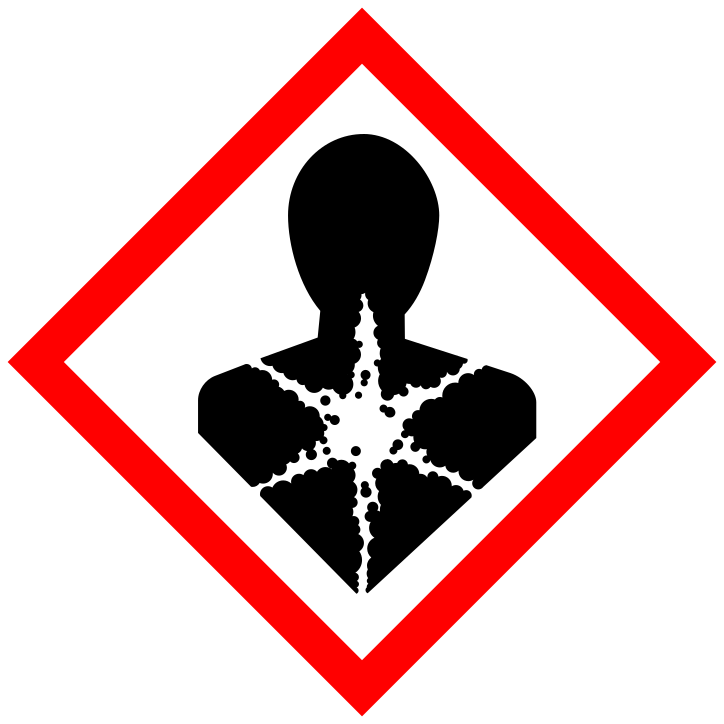 GHS08 Health Hazard 13 · 35.1%
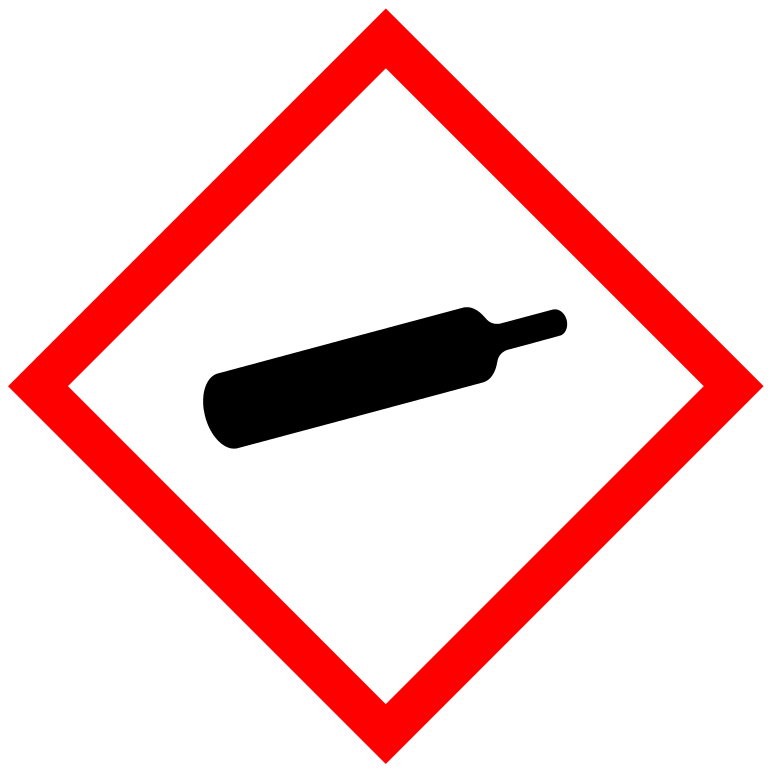 GHS04 Gas Cylinder 5 · 13.5%
An oxidiser is as likely to be corrosive as to be an environmental hazard, and it reaches the flame pictogram almost never — it does not burn, it makes other things burn.
When GHS03 changes what else is shown
Article 26 of CLP cuts the number of diamonds on a label. One of its five rules touches GHS03.
If GHS01 applies, the use of GHS02 and GHS03 becomes optional — unless more than one of them is compulsory.
Never in play in the harmonised list: not one of the 37 entries carrying flame over circle also carries the exploding bomb.
Nothing in Article 26 makes GHS03 optional in the other direction unless a rule above says so. All five precedence rules, with the number of substances each one affects.
Storage & handling requirements
Store separately from all flammable, combustible, and organic materials. Keep cool and dry. Use dedicated non-combustible storage. Never store near reducing agents or acids. Ensure adequate ventilation.
Regulatory context (CLP / OSHA / REACH)
CLP categories: Oxidising Gases Cat. 1 (H270), Oxidising Liquids Cat. 1–3 (H271/H272), Oxidising Solids Cat. 1–3. OSHA 29 CFR 1910.104 covers oxygen storage. Special permits may apply for Category 1 oxidisers.
Transport marking: GHS vs ADR/DOT
ADR Class 5.1 (oxidising substances) or Class 2.2 with oxidising sub-risk. Yellow diamond with black flame over circle. Must be segregated from Class 3 and Class 4 goods during transport.
Printing GHS03 on a label
A square set at a point — a diamond — with the black symbol on a white background and a red frame wide enough to be clearly visible. An all-black frame is a transport label, not a CLP pictogram. Size is set twice over: each pictogram must cover at least one fifteenth of the minimum label area required by Article 17, and must never be smaller than 1 cm². On a package of 3 litres or less that works out to 10 × 10 mm as the floor, and 16 × 16 mm where it fits.
Source: Regulation (EC) No 1272/2008, Annex I, 1.2.1.1–1.2.1.4 and Table 1.3 — the full table for all four package sizes. Building an actual label? The label constructor lays it out at the right proportions.
GHS03 — Flame Over Circle
High-resolution SVG vector file. Free for use in safety documents, SDS, and label design.
Substances classified with GHS03
Showing 24 of 37 substances in our database with this pictogram. View all →
- troclosene potassium [1] troclosene sodium [2] CAS 2244-21-5Danger No single CASLabel
- perboric acid, sodium salt [1] perboric acid, sodium… CAS 11138-47-9Danger No single CASLabel
- nitrogen dioxide [1] dinitrogen tetraoxide [2] CAS 10102-44-0Danger No single CASLabel
- nickel dinitrate [1] nitric acid, nickel salt [2] CAS 13138-45-9Danger No single CASLabel
- chlorine CAS 7782-50-5Danger SDS →Label
- potassium dichromate CAS 7778-50-9Danger SDS →Label
- Barium chlorate CAS 13477-00-4Danger Details →Label
- symclosene CAS 87-90-1Danger Details →Label
- diammonium peroxodisulphate CAS 7727-54-0Danger Details →Label
- Sodium Perchlorate CAS 7601-89-0Danger Details →Label
- Chlorine Dioxide CAS 10049-04-4Danger Details →Label
- Chromyl chloride CAS 14977-61-8Danger Details →Label
- 1,3-dichloro-5-ethyl-5-methylimidazolidine-2,4-dione CAS 89415-87-2Danger Details →Label
- chromium trioxide CAS 1333-82-0Danger SDS →Label
- hydrogen peroxide CAS 7722-84-1Danger SDS →Label
- oxygen CAS 7782-44-7Danger SDS →Label
- potassium permanganate CAS 7722-64-7Danger SDS →Label
- silver nitrate CAS 7761-88-8Danger SDS →Label
- dichloro-1,3,5-triazinetrione CAS 2782-57-2Danger Details →Label
- Sodium Nitrite CAS 7632-00-0Danger Details →Label
- Potassium nitrite CAS 7758-09-0Danger Details →Label
- Fluorine CAS 7782-41-4Danger Details →Label
- Sodium peroxide CAS 1313-60-6Danger Details →Label
- dipotassium peroxodisulphate CAS 7727-21-1Danger Details →Label
Need full toxicological data?
GHS Symbols provides detailed hazard classification, H/P statements, ATE values and storage compatibility for all substances.
Ready to build a GHS-compliant label?
Auto-filled with GHS03 — Flame Over Circle hazard data
Open Label Maker → See all free GHS tools →