GHS Hazard Pictogram
GHS09 — Environmental Hazard Pictogram
Also called the environmental hazard symbol. Signal word: Warning.
Aquatic environmental hazards
What does GHS09 mean?
The environmental hazard pictogram indicates substances that are acutely or chronically toxic to aquatic life (H400–H413) or harm the ozone layer (H420). Even small releases can cause lasting ecological damage to water systems.
Straight answers
What does the environmental hazard pictogram indicate?
Harm to the aquatic environment: acute category 1, and long-term categories 1 and 2. 2 CLP hazard classes lead to it, carrying 3 hazard statements — H400, H410 and H411.
Why do H412 and H413 have no pictogram?
Because CLP stops the picture at long-term category 2. Categories 3 and 4 — harmful to aquatic life with long lasting effects, and may cause long lasting harmful effects — carry the hazard statement and no pictogram, no signal word. A label with no dead fish on it can still describe a substance that should never reach a drain.
Is the environment pictogram required in the United States?
No. OSHA lists eight standard hazard symbols in Appendix C to 1910.1200, Figure C.1, and the environment is not among them — aquatic hazards fall to the EPA, not to the Hazard Communication Standard. The same substance can legally carry this diamond on an EU label and not on a US one, which is a common source of confusion when a supplier ships to both.
Which signal word goes with the environmental hazard pictogram?
Always Warning. Aquatic acute 1 and aquatic chronic 1 and 2 all take the same word — this pictogram never appears with Danger.
How many chemicals carry GHS09?
1,495 substances with a harmonised classification in CLP Annex VI.
Every number here is computed from CLP Annex VI at build time. See all nine pictograms compared.
Which hazard classes require GHS09?
GHS09 is assigned by 2 hazard classes across 3 categories under CLP and UN GHS. The signal word is set by the category, not by the pictogram — which is why the same pictogram can carry both Danger and Warning. The full wording of every code is listed under Associated H-statements below.
Interactive tool
Aquatic L(E)C50 → environmental classification
Enter the lowest acute L(E)C50 / EC50 (fish, crustacea or algae) in mg/L.
Associated H-statements (3)
Each code opens its own page: the verbatim CLP wording, its status under EU CLP, OSHA HazCom and UN GHS, and every harmonised substance that carries it. See also the full list of hazard statements and the precautionary statements.
Which pictograms appear next to GHS09
A label rarely carries one diamond. Counted across the 1,495 harmonised substances that carry GHS09 — before the Article 26 precedence rules remove anything.
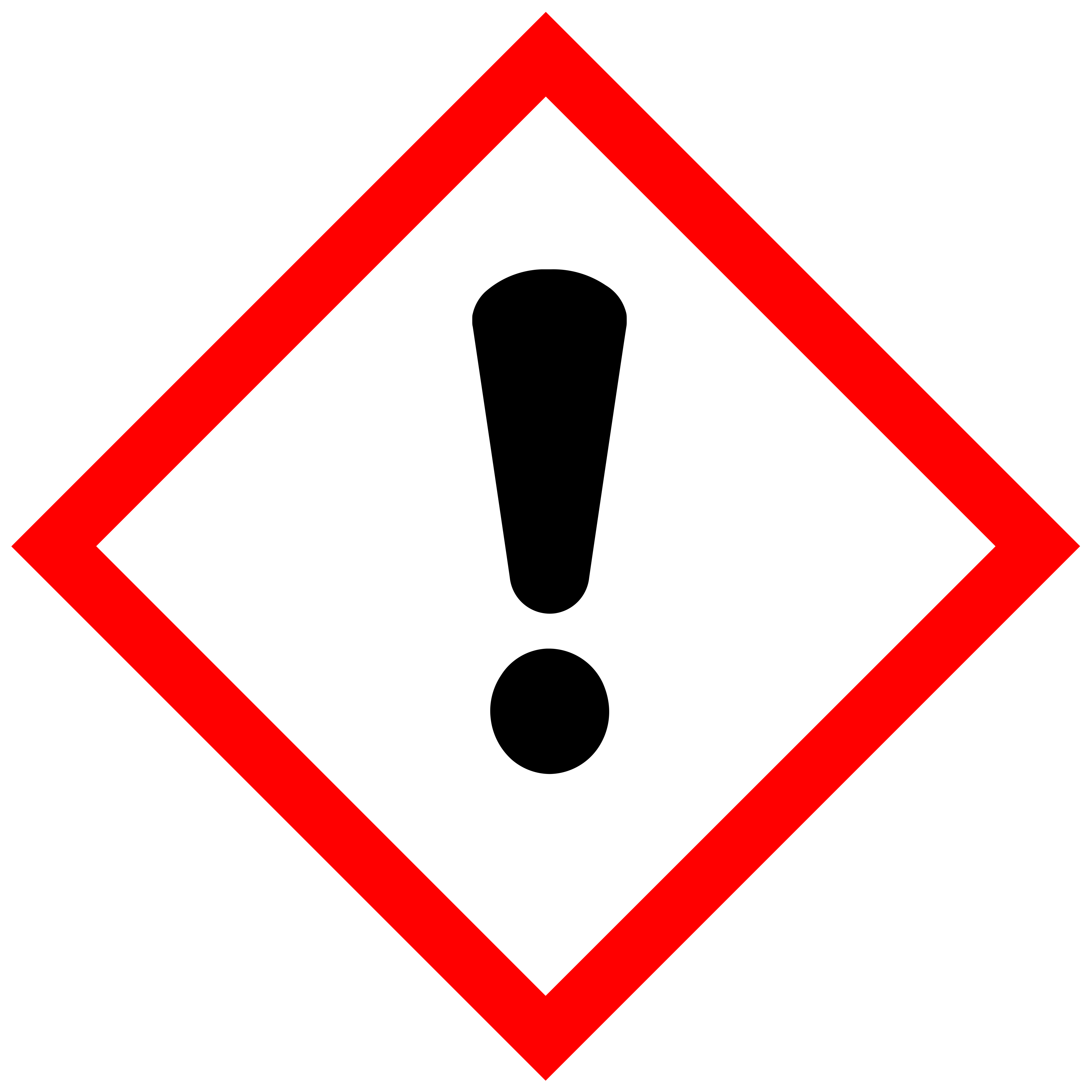 GHS07 Exclamation Mark 730 · 48.8%
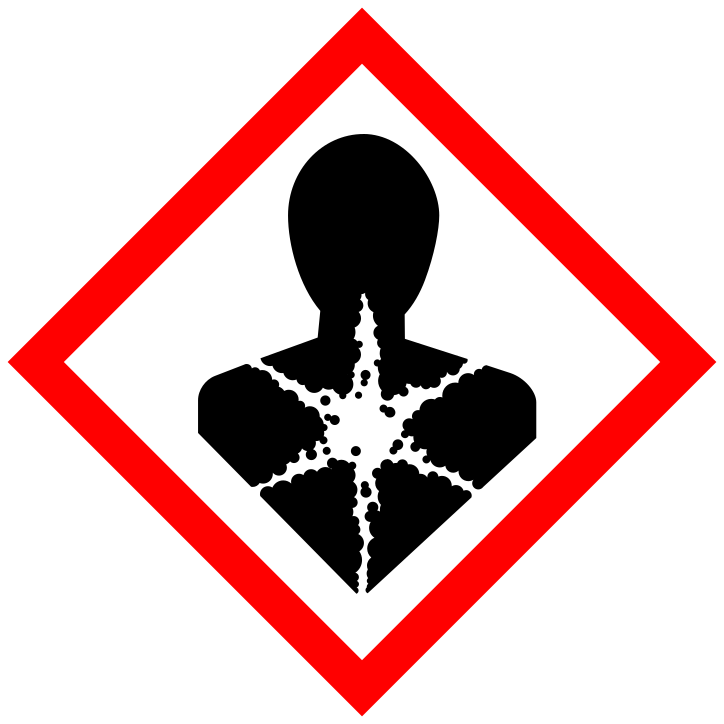 GHS08 Health Hazard 609 · 40.7%
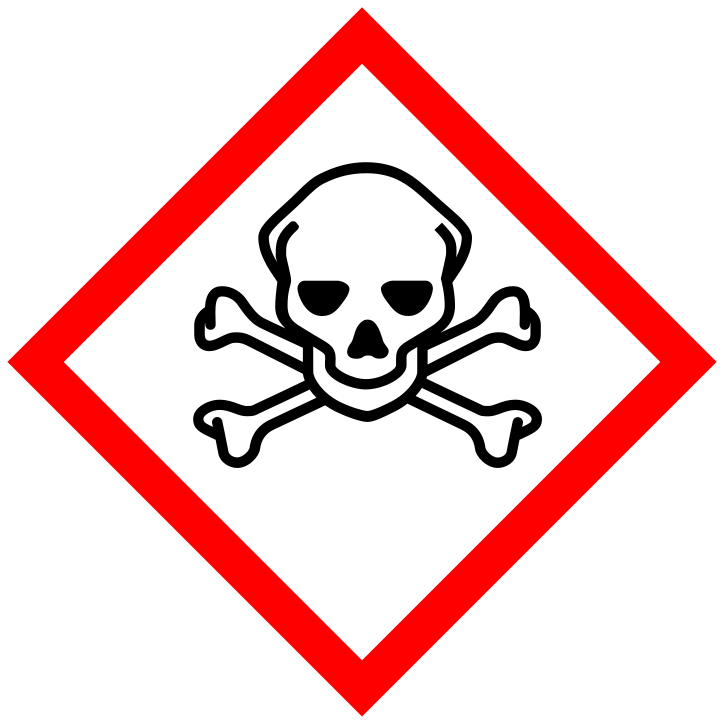 GHS06 Skull and Crossbones 380 · 25.4%
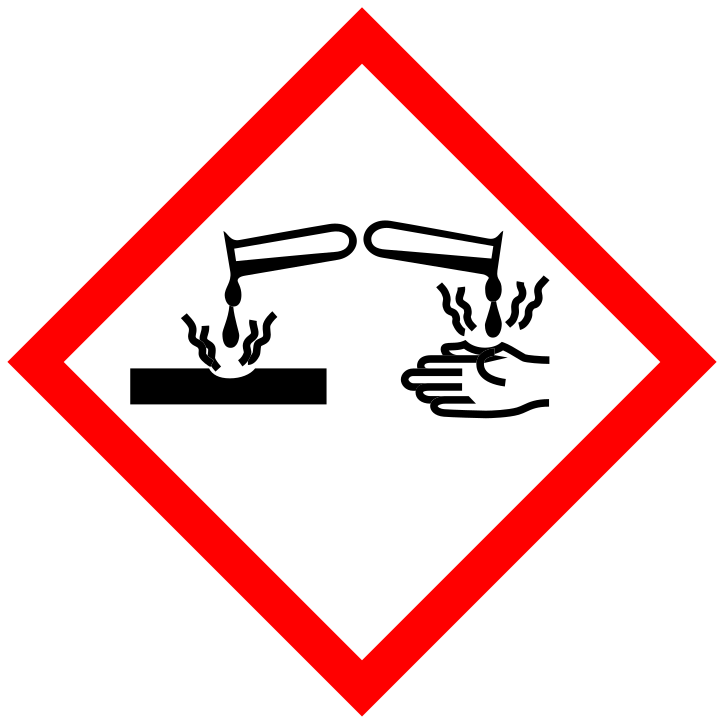 GHS05 Corrosion 296 · 19.8%
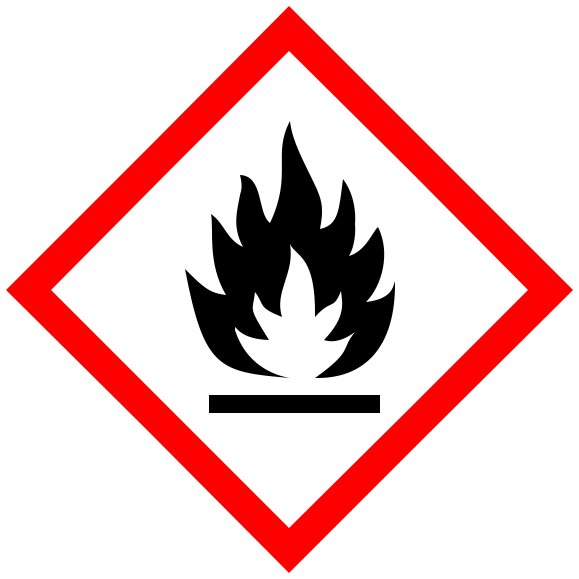 GHS02 Flame 101 · 6.8%
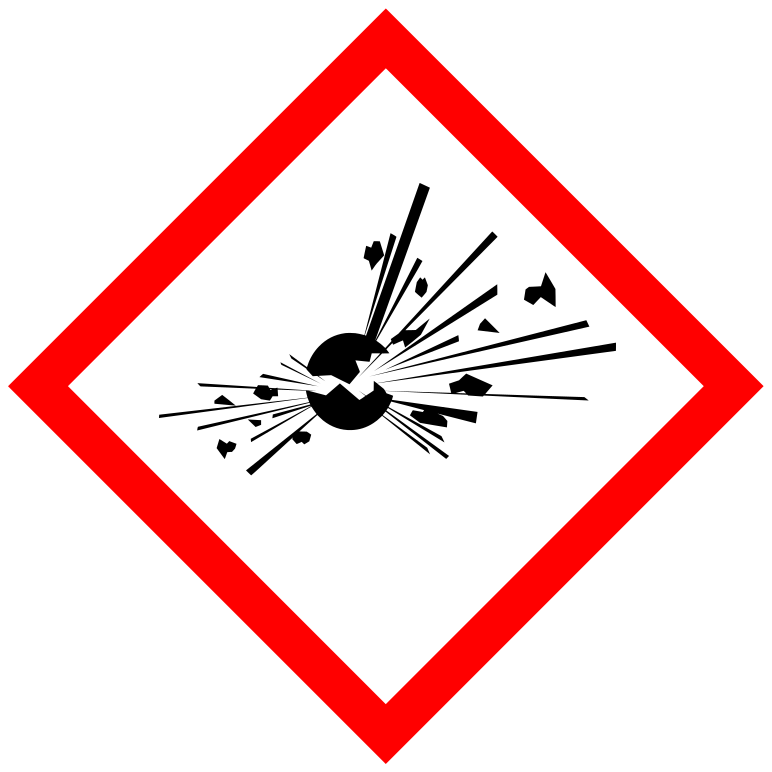 GHS01 Exploding Bomb 22 · 1.5%
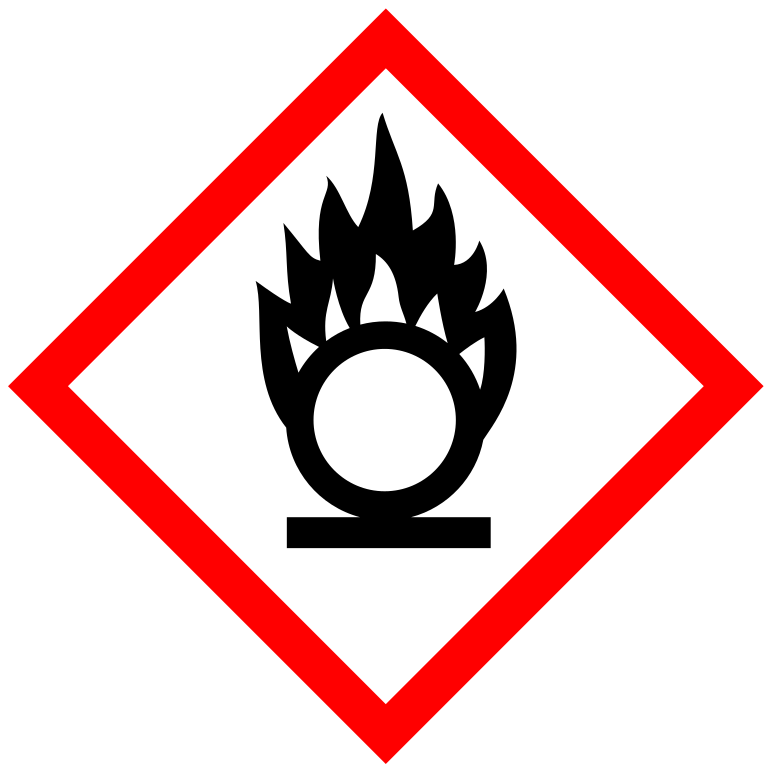 GHS03 Flame Over Circle 19 · 1.3%
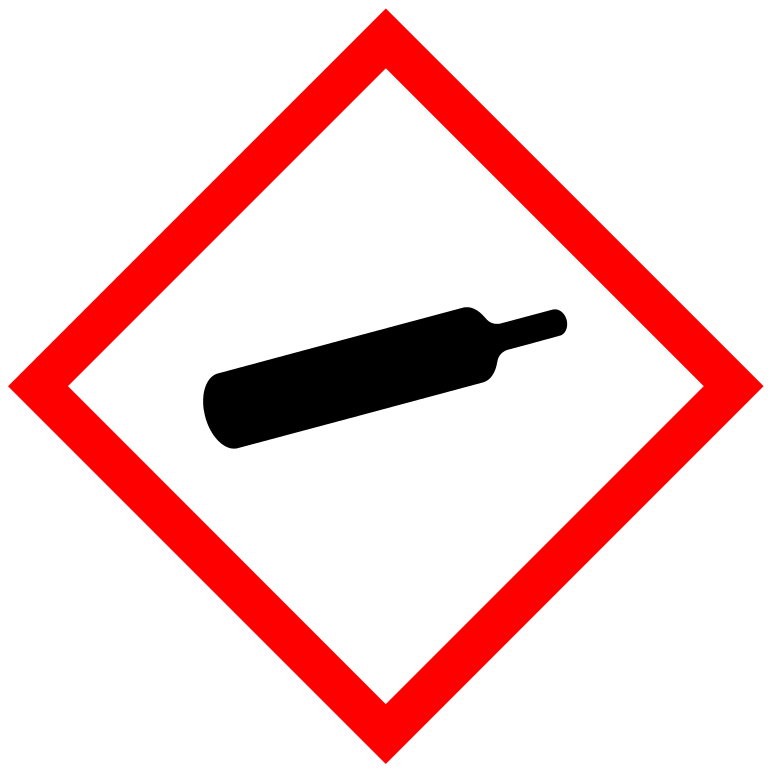 GHS04 Gas Cylinder 10 · 0.7%
The environment pictogram rarely travels alone — it sits next to the exclamation mark on half of these entries and next to the health hazard on four in ten.
Storage & handling requirements
Do not allow entry to drains, waterways, or soil. Use bunded storage areas. Spill containment equipment must be available. Disposal must comply with local water authority regulations. Contact emergency services immediately for significant spills near water.
Regulatory context (CLP / OSHA / REACH)
CLP Aquatic Acute Cat. 1 (H400) and Chronic Cat. 1–4 (H410–H413). EU Water Framework Directive (2000/60/EC) sets environmental quality standards. Priority substances under Annex II may face market restrictions. REACH registration requires aquatic toxicity data.
Transport marking: GHS vs ADR/DOT
Environmentally hazardous substances (aquatic) transported under ADR as Class 9 or with marine pollutant mark (MP). IMDG Code requires marine pollutant label for sea transport. PP1 packaging provision applies for small quantities.
Printing GHS09 on a label
A square set at a point — a diamond — with the black symbol on a white background and a red frame wide enough to be clearly visible. An all-black frame is a transport label, not a CLP pictogram. Size is set twice over: each pictogram must cover at least one fifteenth of the minimum label area required by Article 17, and must never be smaller than 1 cm². On a package of 3 litres or less that works out to 10 × 10 mm as the floor, and 16 × 16 mm where it fits.
Source: Regulation (EC) No 1272/2008, Annex I, 1.2.1.1–1.2.1.4 and Table 1.3 — the full table for all four package sizes. Building an actual label? The label constructor lays it out at the right proportions.
GHS09 — Environmental Hazard
High-resolution SVG vector file. Free for use in safety documents, SDS, and label design.
Substances classified with GHS09
Showing 24 of 1495 substances in our database with this pictogram. View all →
- Imiprothrin CAS 72963-72-5Warning Details →Label
- reaction mass of: dodecanoic acid (35-40 %) + 1 more CAS 58856-63-6Danger Details →Label
- reaction mass of N,N'-ethane-1,2-diylbis(decanamide)…Warning No single CASLabel
- hydroxylamine ....% [> 55 % in aqueous solution] CAS 7803-49-8Danger Details →Label
- fatty acids, C18-unsatd., dimers, reaction products… CAS 206565-89-1Danger Details →Label
- troclosene potassium [1] troclosene sodium [2] CAS 2244-21-5Danger No single CASLabel
- trisodium hexafluoroaluminate [1] trisodium… CAS 13775-53-6Danger No single CASLabel
- methyl 3-[(dimethoxyphosphinothioyl)oxy]methacrylate… CAS 30864-28-9Warning No single CASLabel
- nickel (II) sulfide [1] nickel sulfide [2] millerite… CAS 16812-54-7Danger No single CASLabel
- nickel di(acetate) [1] nickel acetate [2] CAS 373-02-4Danger No single CASLabel
- nickel boride (NiB) [1] dinickel boride [2] trinickel… CAS 12007-00-0Danger No single CASLabel
- tetracopper hexahydroxide sulphate [1] tetracopper… CAS 1333-22-8Warning No single CASLabel
- 1,3-dichloropropene [1] (Z)-1,3-dichloropropene [2] CAS 542-75-6Danger No single CASLabel
- [(p-tolyloxy)methyl]oxirane [1] [(m-tolyloxy)methyl]oxi… CAS 2186-24-5Warning No single CASLabel
- nickel dihydroxide [1] nickel hydroxide [2] CAS 12054-48-7Danger No single CASLabel
- nickel dinitrate [1] nitric acid, nickel salt [2] CAS 13138-45-9Danger No single CASLabel
- nickel dipotassium bis(sulfate) [1] diammonium nickel… CAS 13842-46-1Danger No single CASLabel
- nickel diformate [1] formic acid, nickel salt [2]… CAS 3349-06-2Danger No single CASLabel
- nickel difluoride [1] nickel dibromide [2] nickel… CAS 10028-18-9Danger No single CASLabel
- nickel hydrogen phosphate [1] nickel bis(dihydrogen… CAS 14332-34-4Danger No single CASLabel
- nickel(II) silicate [1] dinickel orthosilicate [2]… CAS 21784-78-1Danger No single CASLabel
- nickel oxalate [1] oxalic acid, nickel salt [2] CAS 547-67-1Danger No single CASLabel
- nickel diarsenide [1] nickel arsenide [2] CAS 12068-61-0Danger No single CASLabel
- nickel dichlorate [1] nickel dibromate [2] ethyl… CAS 67952-43-6Danger No single CASLabel
Need full toxicological data?
GHS Symbols provides detailed hazard classification, H/P statements, ATE values and storage compatibility for all substances.
Ready to build a GHS-compliant label?
Auto-filled with GHS09 — Environmental Hazard hazard data
Open Label Maker → See all free GHS tools →