GHS Hazard Pictogram
GHS08 — Health Hazard Pictogram
Also called the health hazard symbol. Signal word: Danger or Warning.
Serious long-term health hazards
What does GHS08 mean?
The health hazard pictogram indicates serious chronic or irreversible health effects: carcinogenicity (H350/H351), mutagenicity (H340/H341), reproductive toxicity (H360/H361/H362), respiratory sensitisation (H334), and specific target organ toxicity (H370–H373).
Straight answers
What does the health hazard pictogram indicate?
Serious health effects that are not immediate poisoning: cancer, genetic damage, harm to fertility or the unborn child, damage to a specific organ, asthma caused by breathing the substance in, and lung damage from swallowing it. 7 CLP hazard classes lead to this pictogram and it carries 12 hazard statements.
Is GHS08 the cancer symbol?
Carcinogenicity is one of the seven hazard classes behind it, not the only one. The same image also appears for mutagenicity, reproductive toxicity, organ toxicity, respiratory sensitisation and aspiration hazard. A drum carrying GHS08 is not necessarily carrying a carcinogen.
What is the difference between GHS08 and GHS06?
Timing. GHS06, the skull and crossbones, means a single dose can kill quickly — acute toxicity categories 1 to 3. GHS08 means harm that shows up later, or harm that is severe without being acutely lethal. Both appear together on 290 substances.
Which signal word goes with the health hazard pictogram?
Both. Category 1 hazards — proven or presumed carcinogens, mutagens and reproductive toxicants, organ damage category 1, aspiration — take Danger. Category 2 hazards, where the evidence is suspected rather than established, take Warning. Five of the nine pictograms appear with either word; GHS06 is always Danger, and GHS04, GHS07 and GHS09 are always Warning.
How many chemicals carry GHS08?
1,791 substances with a harmonised classification in CLP Annex VI — the most common of the nine.
Every number here is computed from CLP Annex VI at build time. See all nine pictograms compared.
Which hazard classes require GHS08?
GHS08 is assigned by 7 hazard classes across 17 categories under CLP and UN GHS. The signal word is set by the category, not by the pictogram — which is why the same pictogram can carry both Danger and Warning. The full wording of every code is listed under Associated H-statements below.
| Hazard class | Ch. | Category | Signal word | H-code |
|---|---|---|---|---|
| Respiratory sensitisation | 3.4 | 1 | Danger | H334 |
| Respiratory sensitisation | 3.4 | 1A | Danger | H334 |
| Respiratory sensitisation | 3.4 | 1B | Danger | H334 |
| Germ cell mutagenicity | 3.5 | 1A | Danger | H340 |
| Germ cell mutagenicity | 3.5 | 1B | Danger | H340 |
| Germ cell mutagenicity | 3.5 | 2 | Warning | H341 |
| Carcinogenicity | 3.6 | 1A | Danger | H350 |
| Carcinogenicity | 3.6 | 1B | Danger | H350 |
| Carcinogenicity | 3.6 | 2 | Warning | H351 |
| Reproductive toxicity | 3.7 | 1A | Danger | H360 |
| Reproductive toxicity | 3.7 | 1B | Danger | H360 |
| Reproductive toxicity | 3.7 | 2 | Warning | H361 |
| Specific target organ toxicity - single exposure | 3.8 | 1 | Danger | H370 |
| Specific target organ toxicity - single exposure | 3.8 | 2 | Warning | H371 |
| Specific target organ toxicity - repeated exposure | 3.9 | 1 | Danger | H372 |
| Specific target organ toxicity - repeated exposure | 3.9 | 2 | Warning | H373 |
| Aspiration hazard | 3.10 | 1 | Danger | H304 |
Interactive tool
Hydrocarbon viscosity → aspiration hazard
For a liquid hydrocarbon, enter the kinematic viscosity (mm²/s at 40 °C).
Associated H-statements (12)
Each code opens its own page: the verbatim CLP wording, its status under EU CLP, OSHA HazCom and UN GHS, and every harmonised substance that carries it. See also the full list of hazard statements and the precautionary statements.
Which pictograms appear next to GHS08
A label rarely carries one diamond. Counted across the 1,791 harmonised substances that carry GHS08 — before the Article 26 precedence rules remove anything.
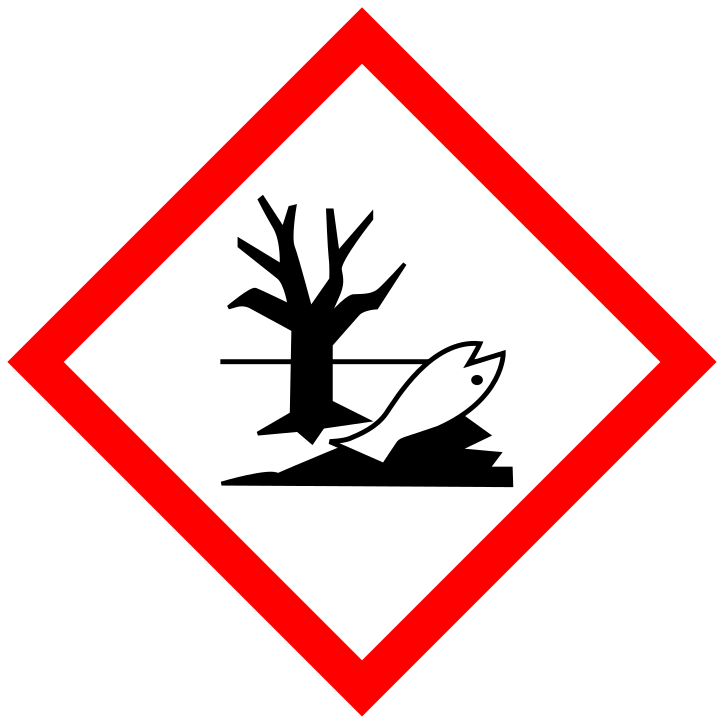 GHS09 Environmental Hazard 609 · 34%
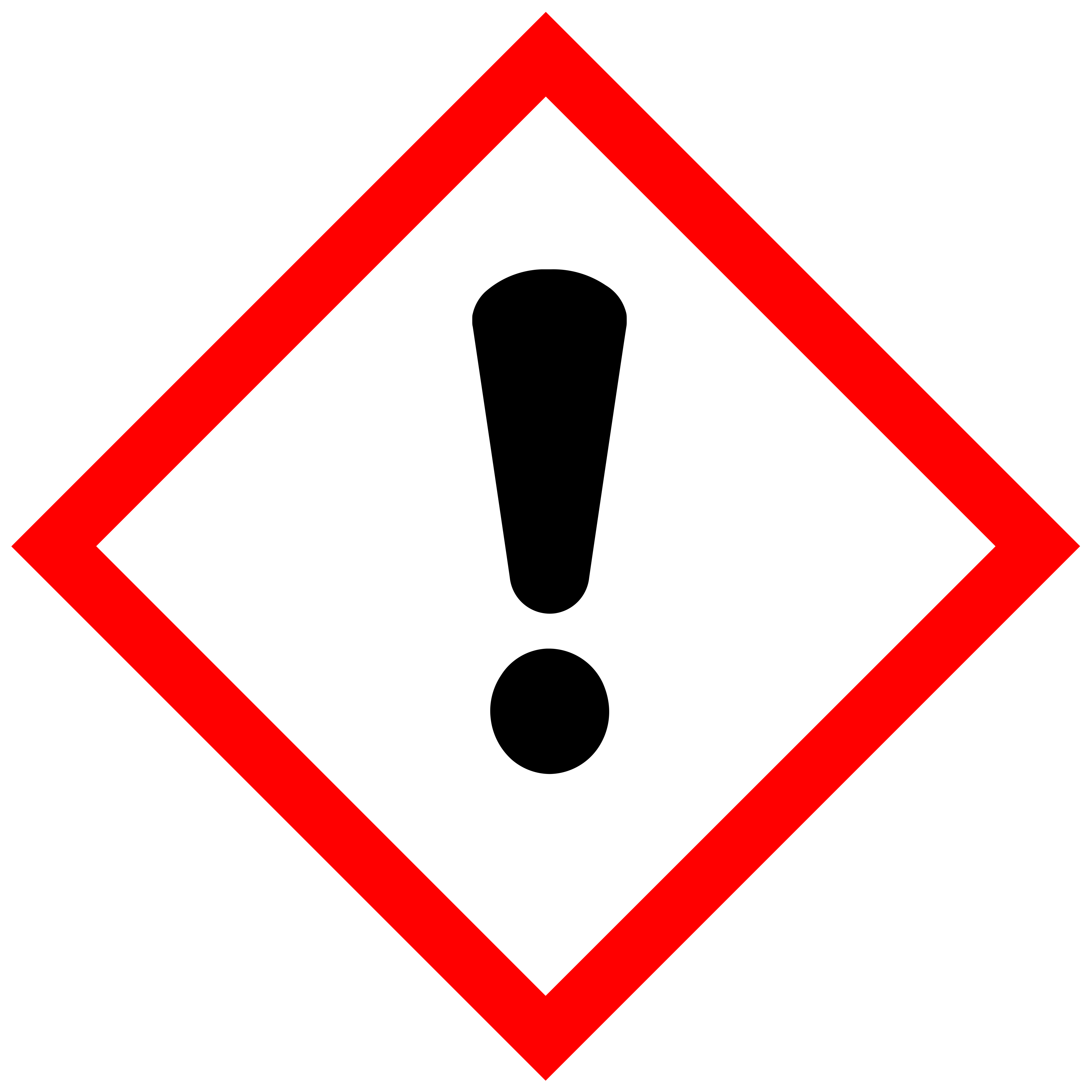 GHS07 Exclamation Mark 478 · 26.7%
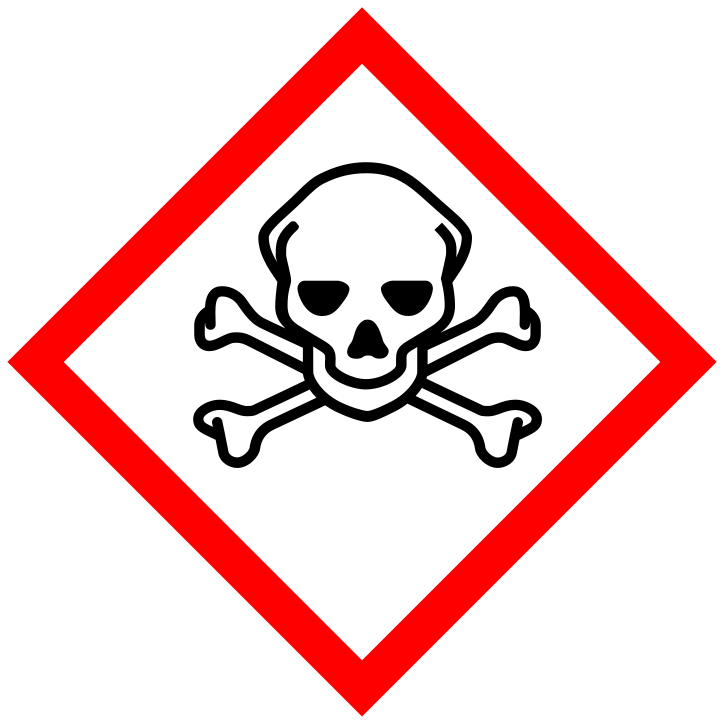 GHS06 Skull and Crossbones 290 · 16.2%
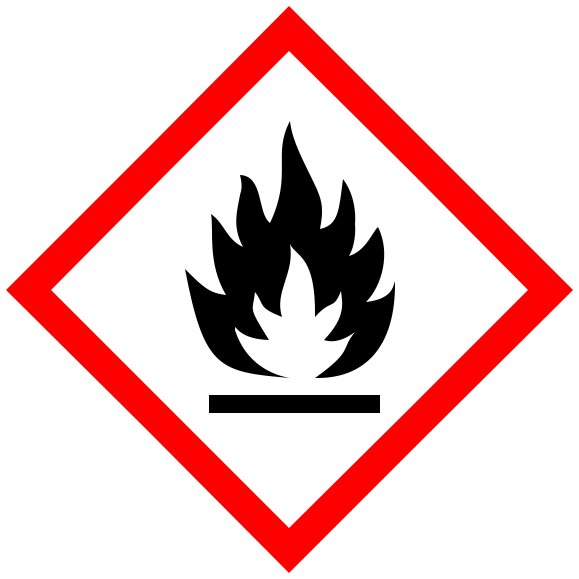 GHS02 Flame 258 · 14.4%
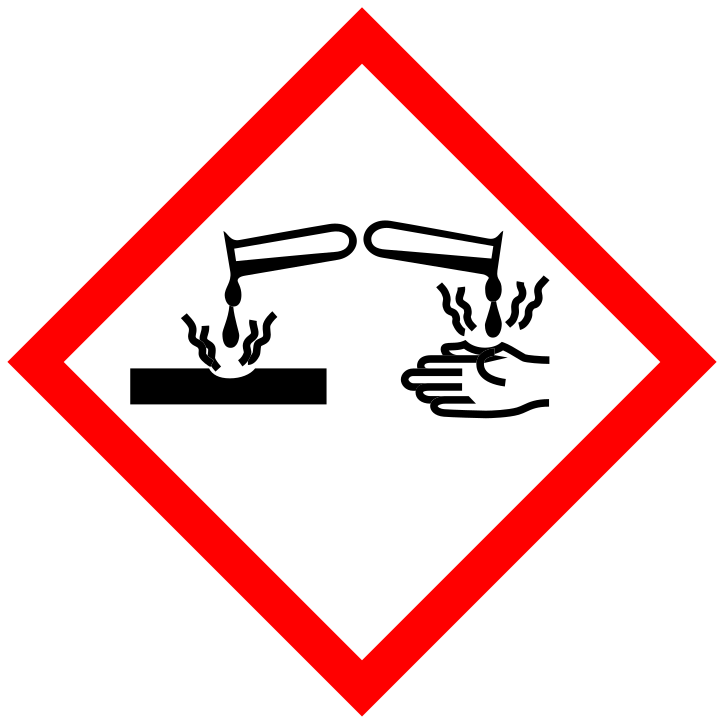 GHS05 Corrosion 225 · 12.6%
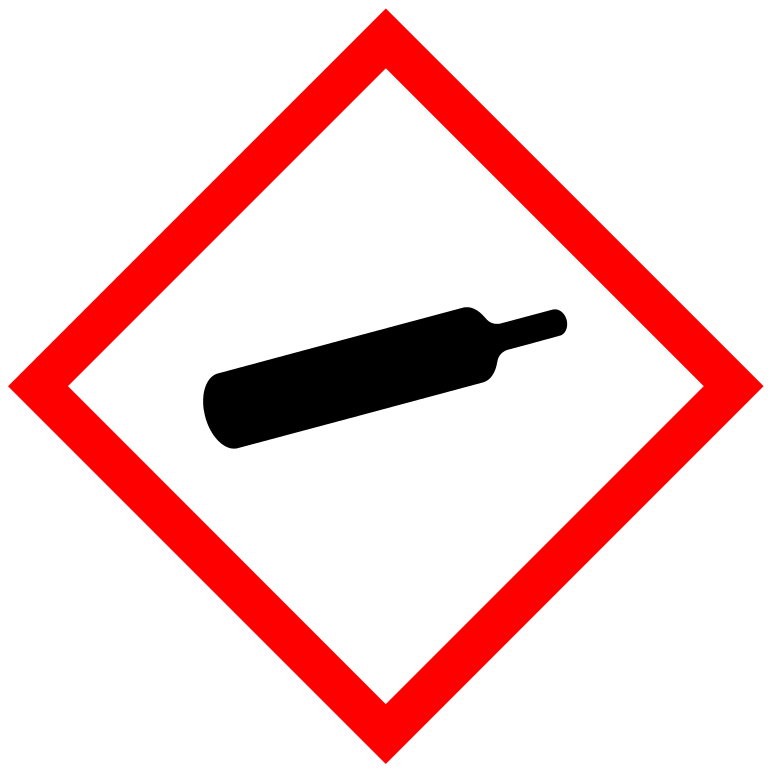 GHS04 Gas Cylinder 156 · 8.7%
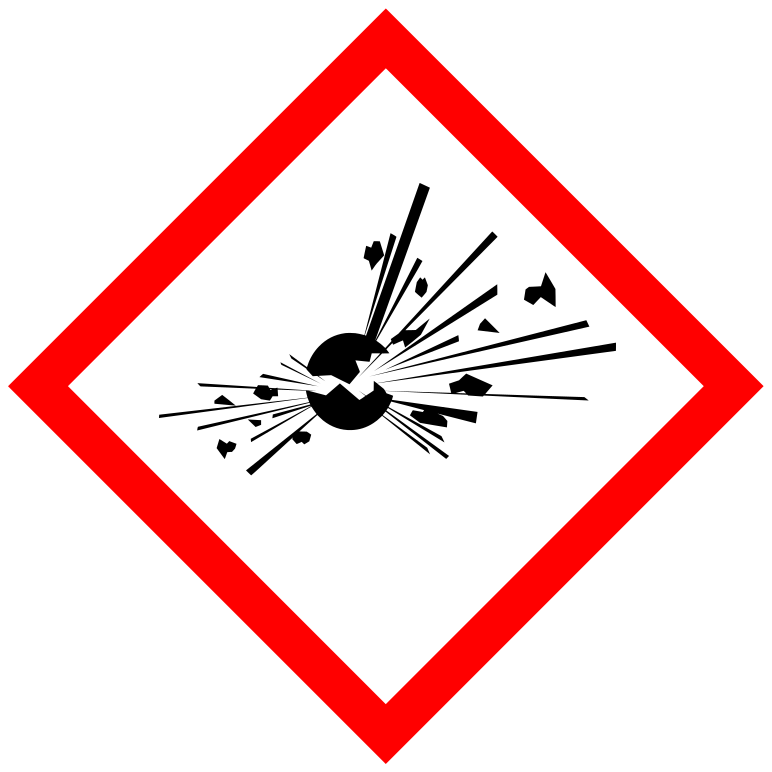 GHS01 Exploding Bomb 22 · 1.2%
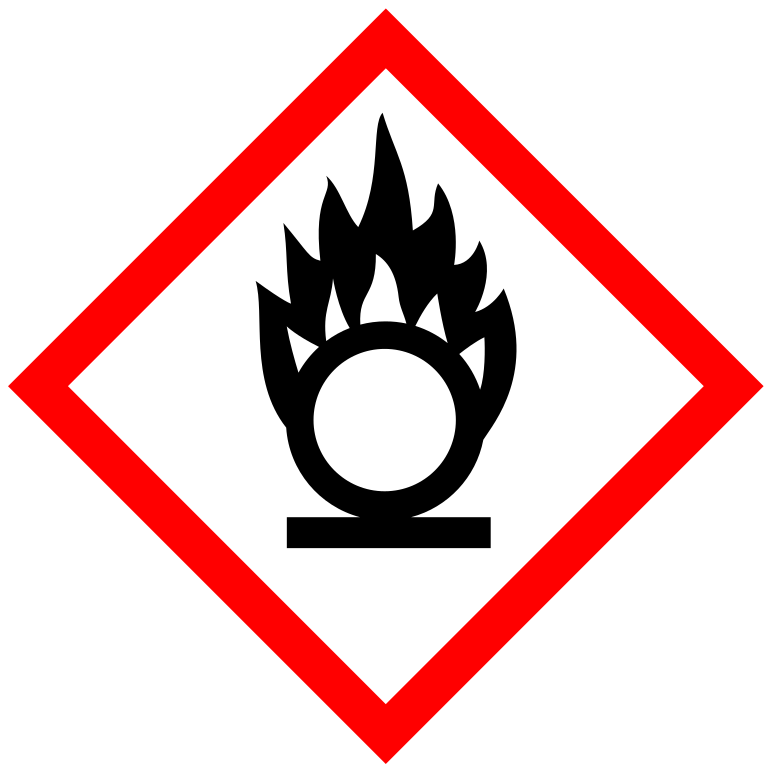 GHS03 Flame Over Circle 13 · 0.7%
The pairing with GHS09 is the one to remember: a third of everything that damages a person over time also damages the aquatic environment, which is why disposal, not just handling, belongs in the risk assessment.
When GHS08 changes what else is shown
Article 26 of CLP cuts the number of diamonds on a label. One of its five rules touches GHS08.
If GHS08 applies for respiratory sensitisation, GHS07 shall not appear for skin sensitisation or for skin and eye irritation.
It fires only when the health-hazard diamond is there because the substance causes asthma — not because it causes cancer or organ damage. 478 harmonised entries carry GHS08 and GHS07 together; the rule reaches only the respiratory-sensitiser slice of them, and leaves the rest with both diamonds.
Nothing in Article 26 makes GHS08 optional in the other direction unless a rule above says so. All five precedence rules, with the number of substances each one affects.
Storage & handling requirements
Minimise exposure using engineering controls: local exhaust ventilation, closed systems, gloveboxes. Biological monitoring and medical surveillance may be legally required. Substitution should be considered for Cat. 1A/1B substances. Restrict access and maintain exposure records.
Regulatory context (CLP / OSHA / REACH)
CMR substances (Cat. 1A/1B) face restrictions under REACH Annex XVII and may be SVHC candidates. EU Directive 2004/37/EC covers carcinogens at work. OSHA 29 CFR 1910.1003–.1016 lists specific carcinogens with individual standards.
Transport marking: GHS vs ADR/DOT
GHS08 substances transported as Class 6.1 or Class 9 depending on classification. Carcinogens and mutagens may be subject to IATA DGR and IMDG Code special provisions for transport documentation and packaging.
Printing GHS08 on a label
A square set at a point — a diamond — with the black symbol on a white background and a red frame wide enough to be clearly visible. An all-black frame is a transport label, not a CLP pictogram. Size is set twice over: each pictogram must cover at least one fifteenth of the minimum label area required by Article 17, and must never be smaller than 1 cm². On a package of 3 litres or less that works out to 10 × 10 mm as the floor, and 16 × 16 mm where it fits.
Source: Regulation (EC) No 1272/2008, Annex I, 1.2.1.1–1.2.1.4 and Table 1.3 — the full table for all four package sizes. Building an actual label? The label constructor lays it out at the right proportions.
GHS08 — Health Hazard
High-resolution SVG vector file. Free for use in safety documents, SDS, and label design.
Substances classified with GHS08
Showing 24 of 1791 substances in our database with this pictogram. View all →
- Imiprothrin CAS 72963-72-5Warning Details →Label
- Gases (petroleum, light steam-cracked, butadiene conc.… CAS 68955-28-2Danger Details →Label
- 3-Azidosulfonylbenzoic acid CAS 15980-11-7Danger Details →Label
- Benzene, 2,4-dichloro-1-fluoro- CAS 1435-48-9Warning Details →Label
- N-ethyl-2-pyrrolidone CAS 2687-91-4Danger Details →Label
- hydroxylamine ....% [> 55 % in aqueous solution] CAS 7803-49-8Danger Details →Label
- 1,5-naphthylene diisocyanate [containing < 0.1 % (w/w)… CAS 3173-72-6Danger Details →Label
- tetraboron disodium heptaoxide, hydrate [1] disodium… CAS 12267-73-1Danger No single CASLabel
- disodium octaborate anhydrous [1] disodium octaborate… CAS 12008-41-2Danger No single CASLabel
- piperazine hydrochloride [1] piperazine… CAS 6094-40-2Danger No single CASLabel
- perboric acid, sodium salt [1] perboric acid, sodium… CAS 11138-47-9Danger No single CASLabel
- trisodium hexafluoroaluminate [1] trisodium… CAS 13775-53-6Danger No single CASLabel
- Laccase CAS 80498-15-3Danger Details →Label
- amylase, α- CAS 9000-90-2Danger Details →Label
- nickel (II) sulfide [1] nickel sulfide [2] millerite… CAS 16812-54-7Danger No single CASLabel
- nickel di(acetate) [1] nickel acetate [2] CAS 373-02-4Danger No single CASLabel
- nickel boride (NiB) [1] dinickel boride [2] trinickel… CAS 12007-00-0Danger No single CASLabel
- dioctyltin dilaurate [1] stannane, dioctyl-, bis (coco… CAS 3648-18-8Danger No single CASLabel
- 1,3-dichloropropene [1] (Z)-1,3-dichloropropene [2] CAS 542-75-6Danger No single CASLabel
- [(p-tolyloxy)methyl]oxirane [1] [(m-tolyloxy)methyl]oxi… CAS 2186-24-5Warning No single CASLabel
- Erionite CAS 12510-42-8Danger Details →Label
- 2,2,4-trimethylhexamethylene-1,6-di-isocyanate [1]… CAS 16938-22-0Danger No single CASLabel
- boric acid CAS 10043-35-3Danger No single CASLabel
- perboric acid (H 3 BO 2(O2 )), monosodium salt… CAS 13517-20-9Danger No single CASLabel
Need full toxicological data?
GHS Symbols provides detailed hazard classification, H/P statements, ATE values and storage compatibility for all substances.
Ready to build a GHS-compliant label?
Auto-filled with GHS08 — Health Hazard hazard data
Open Label Maker → See all free GHS tools →