Substance profile
Hydrocarbons, C12-20, hydrotreated paraffinic, distn. lights
Hydrocarbons, C12-20, hydrotreated paraffinic, distn. lights is a substance with a harmonised classification under EU CLP.
01 · Identification
What Hydrocarbons, C12-20… is
Hydrocarbons, C12-20, hydrotreated paraffinic, distn. lights is a substance with a harmonised classification under EU CLP.
Under the GHS it carries the signal word Danger.
02 · Identifiers
Hydrocarbons, C12-20… identifiers and molecular data
Hydrocarbons, C12-20… CAS number and EC number
Other names for Hydrocarbons, C12-20…
- Gasoil - unspecified
- [A complex combination of hydrocarbons obtained as first runnings from the vacuum distillation of effluents from the treatment of heavy paraffins with hydrogen in the presence of a catalyst. It consists predominantly of hydrocarbons having carbon numbers predominantly in the range of C12 through C20 and boiling in the range of approximately 230 °C to 350 °C (446 °F to 662 °F). It produces a finished oil having a viscosity of 2cSt at 100 °C (212 °F).]
03 · GHS classification
Hydrocarbons, C12-20… hazard classification
Harmonised classification under CLP Annex VI. This is the legally binding classification in the EU; other jurisdictions may differ.
Hydrocarbons, C12-20… pictograms and signal word
Hydrocarbons, C12-20… hazard class and category
| Hazard class | Category | From code | Pictogram |
|---|---|---|---|
| Carcinogenicity GHS chapter 3.6 | Category 1A or 1B | H350 | GHS08 |
Where two values are shown with “or”, the hazard statement is shared by more than one category or by more than one class, and the code alone does not say which. H272, for example, belongs to oxidising liquids and to oxidising solids — the physical state decides. The binding answer for a specific entry is in the CLP Annex VI table itself.
Hydrocarbons, C12-20… hazard statements (H-codes)
| Code | Hazard statement |
|---|---|
| H350 | May cause cancer <state route of exposure if it is conclusively proven that no other routes of exposure cause the hazard>. |
This page lists only the codes assigned to Hydrocarbons, C12-20…. The full reference lives on the hazard statements hub, the precautionary statements hub and the GHS pictograms hub.
Safety Data Sheet
Getting an SDS for Hydrocarbons, C12-20…
A Safety Data Sheet is written for a product, not for a substance: the supplier of the grade you actually buy issues it, so two suppliers of Hydrocarbons, C12-20… issue two different sheets. That is why there is no single authoritative SDS for a substance to download — what there is, is the job of collecting the sheets for the products you hold and keeping them current as suppliers revise them.
04 · Precautionary statements
Hydrocarbons, C12-20… precautionary statements
CLP Annex VI assigns 4 precautionary statements to Hydrocarbons, C12-20…. They are grouped the way a label groups them: what to do before handling, what to do when something has already happened, how to store it and how to dispose of it.
Prevention
What to do before and during handling so the hazard never happens.
Response
What to do once exposure, spillage or fire has already happened.
Reading the notation. … is a blank the supplier fills in — not a truncated sentence.· [square brackets] mark a part printed only when it applies.
05 · Names in the regulation
Hydrocarbons, C12-20… name in 23 EU languages
CLP Annex VI Part 3 is published in every language edition of the regulation, and the identification column is written out in each of them. Nothing below is translated by us: each line is the name as that edition prints it. Under Art. 18(2) the substance name from Annex VI is a lawful product identifier, so this is the wording to put on a label going to that market — and where the cell lists several designations, any one of them qualifies.
| Language | Name in CLP Annex VI Part 3 |
|---|---|
| Bulgarian български | Въглеводороди, C 12-20 , обработени с водород, парафинови, леки дестилати Газьол — неспецифициран[Сложна комбинация от въглеводороди, получени като първи поток от вакуумна дестилация на изходящ поток от обработката на тежки парафини с водород в присъствие на катализатор. Състои се основно от въглеводороди с брой на въглеродните атоми преобладаващо в интервала от C 12 до C 20 , и с температура на кипене приблизително в интервала от 230 o C до 350 o C (446 o F до 662 o F).] От нея се получава крайно масло с вискозитет от 2 cSt. при 100 o C (212 o F).] |
| Spanish español | Hidrocarburos, C 12-20 , parafínicos tratados con hidrógeno, fracciones ligeras de destilación gasóleo, sin especificar |
| Czech čeština | uhlovodíky, C 12-20 , hydrogenované parafinické, destiláty lehké plynový olej – nespecifikovaný |
| Danish dansk | carbonhydrider, C 12-20 -, hydrogenbehandlet paraffin, lette destillater upecificeret gasolie |
| German Deutsch | Kohlenwasserstoffe, C 12-20 , mit Wasserstoff behandelte paraffinhaltige leichte Destillate Gasöl — nicht spezifiziert[Komplexe Kombination von Kohlenwasserstoffen, die man als erste Läufe aus der Vakuumdestillation von Ausflüssen aus der Behandlung von schweren Paraffinen mit Wasserstoff unter Einsatz eines Katalysators erhält. Besteht überwiegend aus Kohlenwasserstoffen mit Kohlenstoffzahlen überwiegend im Bereich von C 12 bis C 20 und siedet im Bereich von etwa 230 o C bis 350 o C (446 o F bis 662 o F).] Ergibt ein Fertigöl mit einer Viskosität von 2 cSt bei 100 o C (212 o F).] |
| Estonian eesti | C 12-20 -süsivesinikud, vesiniktöödeldud parafiinid, kergemini keevad fraktsioonid gaasiõli – määratlemata[Paljude süsivesinike segu, mis on saadud esimeste jooksudena raskete parafiinide katalüütilise vesiniktöötluse väljavoolude vaakumdestillatsioonil. Koosneb peamiselt süsivesinikest, mille süsinikuarv on valdavalt vahemikus C 12–20 ja keemistemperatuur on vahemikus ligikaudu 230–350 o C (446–662 o F).] Saadakse valmisõli viskoossusega 2 cSt temperatuuril 100 o C (212 o F).] |
| Greek ελληνικά | Υδρογονάνθρακες, C 12-20 , κατεργασμένου με υδρογόνο παραφινικού κλάσματος, ελαφρά κλάσματα απόσταξης Gasoil — μη προσδιοριζόμενο |
| English English | Hydrocarbons, C 12-20 , hydrotreated paraffinic, distn. lights Gasoil — unspecified |
| French français | Hydrocarbures, paraffiniques hydrotraités en C 12-20 , fraction légère de distillation gazole — non spécifié[combinaison complexe d'hydrocarbures constituant la première fraction obtenue lors de la distillation sous vide des effluents issus du traitement à l'hydrogène de paraffines lourdes en présence d'un catalyseur. Se compose principalement d'hydrocarbures comportant majoritairement entre 12 et 20 atomes de carbone (C 12 -C 20 )et dont l'intervalle d'ébullition est compris approximativement entre 230 et 350 o C (entre 446 et 662 o F).] Donne une huile-produit fini de viscosité égale à 2 cSt à 100 o C (212 o F).] |
| Croatian hrvatski | ugljikovodici, C 12-20 , hidroobrađeni parafinski, laki dest. plinsko ulje – nespecificirano[Složeni sastav ugljikovodika dobiven kao prvi tok iz vakuumske destilacije efluenata iz hidroobrade teških parafina uz prisustvo katalizatora. Sastoji se uglavnom od ugljikovodika koji imaju broj ugljikovih atoma pretežno u području od C 12 do C 20 i vriju u području od približno 230 o C do 350 o C (446 o F do 662 o F).] Daje gotovo ulje viskoznosti 2 cSt pri 100 o C (212 o F).] |
| Italian italiano | idrocarburi, C 12-20 , paraffinici idrotrattati, frazioni leggere della distillazione gasolio — non specificato |
| Latvian latviešu | Ogļūdeņraži, C 12-20 , parafīnu, hidroattīrīti, destilācijas vieglās frakcijas Gāzeļļa — nav precizēta |
| Lithuanian lietuvių | Angliavandeniliai, C 12-20 , hidrinti, turintys parafinų, lengvieji distiliatai gazolis – detaliau nenurodyta |
| Hungarian magyar | Szénhidrogének, C 12-20 , hidrogénnel kezelt paraffinos, deszt. könnyű Gázolaj – nem meghatározott |
| Maltese Malti | Idrokarburi, C 12-20 , idrotrattati paraffiniċi, ħfief tad-distillazzjoni Żejt tal-gass — mhux speċifikat[Taħlita kumplessa ta' idrokarburi miksuba bħala l-ewwel riżultati mid-distillazzjoni f'vakwu tal-effluwent mit-trattament ta' paraffini tqal bl-idroġenu fil-preżenza ta' katalist. Tikkonsisti b'mod predominanti f'idrokarburi b'numri tal-karbonju b'mod predominanti fil-medda ta' C 12 sa C 20 u b'punt ta' togħlija fil-medda ta' bejn wieħed u ieħor 230 o C sa 350 o C (446 o F sa 662 o F).] Tipproduċi żejt lest b'viskożità ta' 2cSt f'100 o C (212 o F).] |
| Dutch Nederlands | koolwaterstoffen, C 12-20 -, met waterstof behandelde paraffinische, lichte destillatiefracties gasolie — niet gespecifieerd |
| Polish polski | Węglowodory parafinowe C 12-20 obrabiane wodorem, destylaty lekkie Olej gazowy – niespecyfikowany |
| Portuguese português | hidrocarbonetos, C 12-20 , parafínicos, tratados com hidrogénio, frações leves de destilação gasóleo — não-especificado |
| Romanian română | Hidrocarburi, fracția C 12-20 , parafinice hidrotratate, fracție ușoară de distilare Motorină — fără specificații |
| Slovak slovenčina | C 12-20 -uhľovodíky, hydrogenované, alkánové, ľahké destilačné frakcie plynový olej – nešpecifikovaný[Komplexná zmes uhľovodíkov získavaná v podobe predkvapu z vákuovej destilácie kvapalného produktu z hydrogenácie vyšších alkánov za prítomnosti katalyzátora. Pozostáva predovšetkým z uhľovodíkov s počtom atómov uhlíka prevažne v rozmedzí od C 12 do C 20 . Má teplotu varu v rozmedzí približne od 230 o C do 350 o C (od 446 o F do 662 o F).] Vytvára výsledný olej (rafinát) s viskozitou 2 cSt pri 100 o C (212 o F).] |
| Slovenian slovenščina | ogljikovodiki, C 12–20 , obdelani z vodikom, parafinski, lahkohlapni destilati plinsko olje – nespecificirano |
| Finnish suomi | Hiilivedyt, C 12 –20, vetykäsitelty parafiininen, kevyet jakeet Kaasuöljy – täsmentämätön |
| Swedish svenska | Kolväten, C 12-20 , vätebehandlade paraffiniska, lätta destillat Gasolja – ospecificerad |
All 23 language editions of Annex VI carry this entry. Irish is the twenty-fourth official EU language and has no line here for a different reason: no consolidated CLP text has ever been published in Irish, so there is no Irish edition of Annex VI to quote a name from. Source: consolidated CLP, CELEX 02008R1272, language editions. © European Union, https://eur-lex.europa.eu — only the electronic Official Journal of the European Union is authentic.
06 · Label elements
Hydrocarbons, C12-20… GHS label elements
Everything CLP Annex VI fixes for Hydrocarbons, C12-20…, laid out the way it appears on a label. The greyed lines are the parts only the supplier can fill in.

Danger
Hydrocarbons, C12-20…
- May cause cancer <state route of exposure if it is conclusively proven that no other routes of exposure cause the hazard>.
- Obtain special instructions before use.
- Wear protective gloves/protective clothing/eye protection/face protection/hearing protection/…
- IF exposed or concerned:
- Get medical advice/attention.
Supplier name, address and telephone number· Product identifier·Nominal quantity
Need this as an actual label? Open Hydrocarbons, C12-20… in the GHS label constructor →
07 · Transport
Hydrocarbons, C12-20… UN number and transport classification
Transport classification is a separate system from the GHS classification above. It decides how a package is marked and how a load may be carried; it does not follow from the workplace label, and the workplace label does not follow from it. The entries below are linked by CAS number, never by name.
Hydrocarbons, C12-20… under UN 3295 — shipping name, class and packing group
Europe · ADR 2025, Table A
| Proper shipping name (3.1.2) | Class | Classification code | PG | Labels (column 5) |
|---|---|---|---|---|
| HYDROCARBONS, LIQUID, N.O.S. | 3 | F1 | I | |
| HYDROCARBONS, LIQUID, N.O.S. (vapour pressure at 50 °C more than 110 kPa) | 3 | F1 | II | |
| HYDROCARBONS, LIQUID, N.O.S. (vapour pressure at 50 °C not more than 110 kPa) | 3 | F1 | II | |
| HYDROCARBONS, LIQUID, N.O.S. | 3 | F1 | III | |

Source: ADR 2025, Table A of Chapter 3.2 · ECE/TRANS/352 Vol. I (UNECE). Class 3 is “Flammable liquids” (ADR 2.1.1.1).
United States · 49 CFR 172.101 Hazardous Materials Table
| Proper shipping name (column 2) | Class or division | PG | Labels (column 6) |
|---|---|---|---|
| Hydrocarbons, liquid, n.o.s. | 3 | I | |
| Hydrocarbons, liquid, n.o.s. | 3 | II | |
| Hydrocarbons, liquid, n.o.s. | 3 | III | |
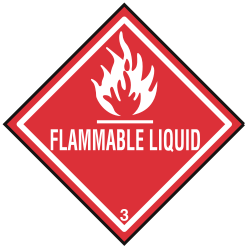
Source: 49 CFR 172.101 Hazardous Materials Table · eCFR, revision 2026-08-03. Class 3 is “Flammable and combustible liquid” (49 CFR 173.2).
08 · Questions
Hydrocarbons, C12-20… — frequently asked questions
What is the CAS number of Hydrocarbons, C12-20…?
The CAS number of Hydrocarbons, C12-20… is 97675-86-0. Its EC number is 307-660-1.
What does a Hydrocarbons, C12-20… label have to show?
Under CLP Annex VI the label for Hydrocarbons, C12-20… carries the pictogram Health hazard and the signal word is Danger.
Is Hydrocarbons, C12-20… flammable?
CLP Annex VI assigns Hydrocarbons, C12-20… no flammability hazard class. That is not a statement that it cannot burn: the harmonised list only records the hazards that were assessed for it.
Is Hydrocarbons, C12-20… a carcinogen?
Yes. CLP Annex VI classifies Hydrocarbons, C12-20… as a category 1A or 1B carcinogen and assigns it H350: may cause cancer.
Nearby
Substances next to Hydrocarbons, C12-20…
Keep going: substances starting with H, or search the whole database by name, CAS number, pictogram or signal word.